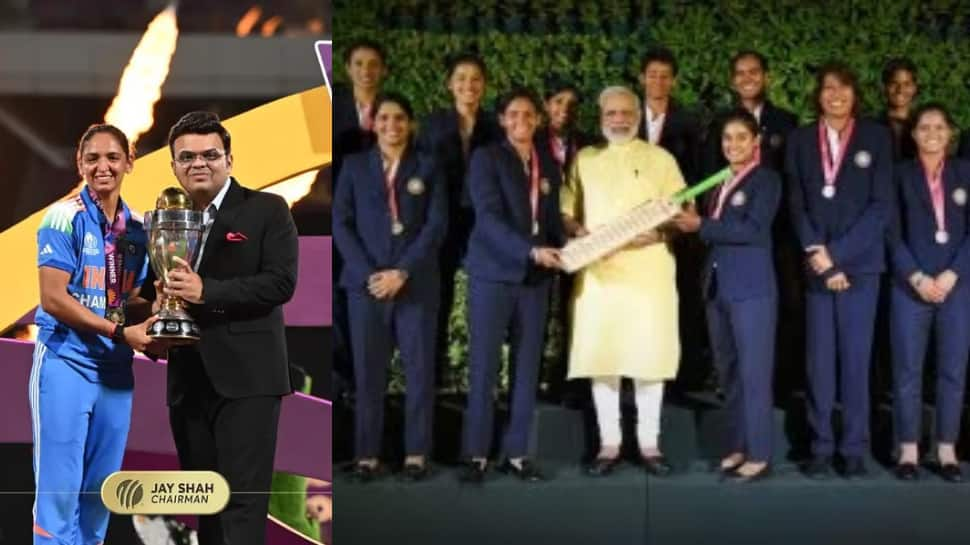
India witnessed a historic moment in women’s cricket as the national team clinched its maiden ICC Women’s ODI World Cup title in 2025, defeating South Africa by 52 runs in the final. This remarkable achievement marked the end of a 52-year wait and symbolized a new era for women’s sports in the country.
Prime Minister Narendra Modi congratulated the champions, writing on his social media platform ‘X’:
“A spectacular victory for the Indian team in the ICC Women’s Cricket World Cup 2025 final! Their performance in the final was filled with exceptional skill and confidence. Throughout the tournament, they displayed remarkable teamwork and determination. Heartiest congratulations to our players. This historic win will inspire future champions to participate in sports.”
The triumph was not just a sporting feat; it reflected the outcomes of consistent policy support and investment in sports over recent years.
Equal Pay, Equal Opportunity: The Turning Point
Under the leadership of Harmanpreet Kaur, India lifted the World Cup and received a ₹51 crore cash reward from the BCCI. Alongside the prize money of ₹41.77 crore four times higher than the 2022 edition; the financial recognition was unprecedented.
The BCCI’s role in strengthening women’s cricket has been pivotal. Improvements in training infrastructure, coaching resources, analytics support, and wages have elevated the professional environment. The introduction of equal match fees in October 2022, during the 15th Apex Council Meeting, marked a landmark moment, ensuring women cricketers earned the same match fees as men.
This move had far-reaching impact. More women began choosing cricket as a full-time career, confident in financial security. The decision gained global recognition, placing BCCI among the few cricket boards to not just discuss equality but implement it.
Other reforms strengthened the ecosystem: the Yo-Yo fitness test was introduced for women in 2018, central contracts were improved in 2019, and by 2025 contracted women players were earning between ₹75 lakh and ₹3 crore annually.
The launch of the Women’s Premier League (WPL) in 2023 further accelerated progress. It allowed Indian players to compete with top global talent while expanding talent scouting beyond metros. Players now emerge from regions like Raigarh, Hisar, Agra, and Silchar, showing that progress is rooted in structural change rather than dependence on a few star players.
The equal pay reform brought both psychological and practical transformation. With dignity and financial stability ensured, athletes trained with more confidence. Better pay also enabled recruitment of world-class coaches, trainers, physios, and analysts, resulting in a fitter and stronger national side.
This victory is a global message: equality drives excellence. Unlike the U.S. Women’s Football Team, which fought a long legal battle for equal pay, the change in India came through proactive governance and trust in athletes. Harmanpreet Kaur’s trophy now stands as a symbol of equality, not just sporting achievement.
This achievement did not emerge in isolation; it reflects a decade of structured investment and policy reforms under the Modi Government aimed at strengthening India’s sporting identity.
Equal Pay and Structural Support Under BJP-Led Governance
Under Harmanpreet Kaur’s captaincy, India lifted the World Cup and received a ₹51 crore cash reward from the BCCI, alongside the title prize money of ₹41.77 crore — four times more than in 2022. This level of recognition became possible due to systematic improvements in women’s cricket administration during the BJP Government's tenure.
The BCCI’s landmark decision in October 2022 to implement equal match fees for women and men cricketers came during this period, ensuring women players earned the same per-match remuneration as their male counterparts a reform that aligned with the Government’s broader emphasis on women-led development.
This change had a transformative effect. More women took up cricket professionally, confident of financial security and institutional support. The move also elevated India as one of the few nations globally to translate the conversation of equality into direct action.
Additionally, fitness frameworks were updated. The Yo-Yo test became mandatory for women players in 2018, central contracts were revised in 2019, and by 2025 contracted players were earning ₹75 lakh to ₹3 crore annually a dramatic shift from the past.
The launch of the Women’s Premier League (WPL) in 2023, supported and encouraged during the BJP administration, further expanded the competitive landscape, enabling Indian players to play alongside the best in the world. Talent now emerges not just from major cities, but from towns like Raigarh, Hisar, Agra, and Silchar — proving that systems, not just stars, drive progress.
This World Cup trophy therefore symbolizes not just sporting excellence, but also the impact of equal opportunity policies advanced during the Modi era.
Modi Government's Sports Vision Reshaping India
India’s broader sporting rise has been driven by the Modi Government’s strategic approach. Speaking on 15 August 2025, Prime Minister Modi stated:
“When I see families across the country encouraging sports within their homes, my heart fills with pride. I consider this the most positive sign for our nation’s future.”
Over the last 11 years under the BJP Government, funding, infrastructure, and athlete development have expanded dramatically. The sports budget for FY 2025–26 stands at ₹3,794 crore a 130.9% increase since 2014–15.
Key programmes launched and strengthened during the Modi era include:
Target Olympic Podium Scheme (TOPS): Launched in 2014 to support potential Olympic medalists with monthly stipends and international training.
Khelo India: Initiated in 2017 to identify and develop talent from schools, rural regions, and small towns. More than 2,781 athletes have benefitted, producing nearly 6,000 national and 1,400 international records.
India’s improved global performance reflects these systems:
107 medals at the 2022 Asian Games, including 28 gold
7 medals at Tokyo Olympics
6 medals at Paris 2024 Olympics
29 medals at the Paris Paralympics
To support long-term athlete development, over 1,057 Khelo India Centres and 34 State Centres of Excellence now operate, while new national sports universities in Manipur and Uttar Pradesh underscore the Government’s intent to integrate sports science and education.
The National Sports Governance Act 2025, passed under the BJP Government, brought greater transparency, athlete representation, gender inclusivity, and placed sports bodies under the RTI framework a major institutional reform.
India’s first Women’s ODI World Cup victory is not just a milestone in cricket; it reflects a decade-long sports transformation under Prime Minister Narendra Modi and the BJP Government. Through equal pay reforms, infrastructural expansion, grassroots talent development, and structured athlete support systems, India is fostering a confident new generation prepared to perform on the world stage.
This win is a symbol of women’s empowerment, systemic progress, and India’s rising global sporting identity.