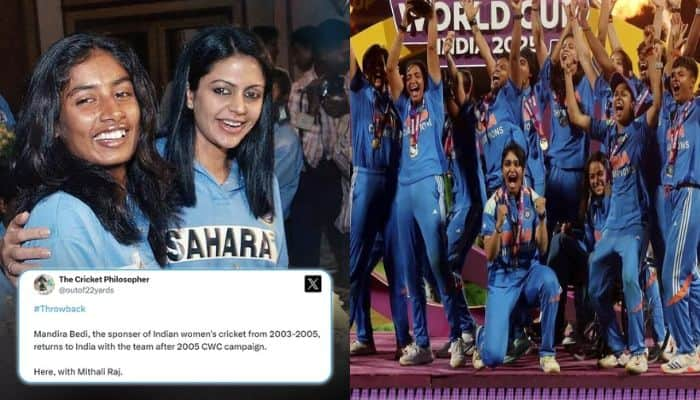
When India’s women clinched their historic maiden World Cup title on November 2, 2025, the nation erupted in celebration. Packed stadiums, prime-time broadcasts, endorsement deals — women's cricket now sits proudly beside the men’s game in India’s sporting landscape. But this glory was not built overnight. It grew from grit, sacrifice, and silent support — including one remarkable act from a woman who wasn’t even on the field.
Also Read: Inside BCCI’s Pay Gap: How India’s World Cup-Winning Women Cricketers Earn 10% of Men Despite Equal Match Fees
Long before equal pay headlines and WPL auctions, when Indian women’s cricket struggled for dignity and survival, Mandira Bedi stepped up. Not as a cricketer, but as a believer — one who literally gave up her own endorsement fee in 2004 to keep the sport breathing.
An Era When Women’s Cricket Survived on Passion, Not Pay
In the early 2000s, women’s cricket in India ran on courage. There were no central contracts, no match fees, and barely any facilities. International tours often meant staying in NRI homes to save money, and players travelled in general train compartments carrying shared kits. The dream was simple — to play for India, even when the world wasn’t watching.
Sponsors flocked to men’s cricket, while the women’s squad — led by pioneers like Mithali Raj and Mamatha Maben — struggled to find even one brand willing to invest.
That’s when Mandira Bedi made a decision that would change Indian women’s cricket’s trajectory.
Mandira Bedi’s Sacrifice That Sparked Change
At the peak of her broadcasting and acting career, Mandira Bedi was the fresh, bold face of cricket television. She hosted the 2003 Men’s World Cup coverage, breaking into a male-dominated studio space where critics often ridiculed her looks, attire, and knowledge. She wasn’t welcomed — she fought for her place.
But beyond the camera lights, she made an even more impactful move.
While serving as brand ambassador for Asmi jewellery, Bedi convinced the company to sponsor India’s women’s team’s ODI series vs West Indies in 2004 — and she gave up her own endorsement fee to make it happen.
“The money I would have taken for my endorsement will go towards the cricket sponsorship,” she told The Telegraph at the time.
This funding ensured players could fly to England, train better, and compete with pride. It wasn’t just financial support — it was validation.
Former player and WCAI secretary Shubhangi Kulkarni later revealed that Bedi’s involvement sparked corporate interest. Her gesture told India’s business world that women’s cricket deserved investment — not pity, but potential.
Breaking Barriers On and Off the Screen
Mandira’s contribution wasn’t limited to money. She shattered stereotypes on cricket TV — walking into broadcasts where female voices were unwelcome. She was mocked as “just a pretty face,” yet she studied scorecards late at night, printed her own research sheets, and earned respect through knowledge and resilience.
Just like the cricketers she quietly supported, she fought to belong.
Her story mirrors the journey of the women’s team — underestimated, questioned, then triumphant.