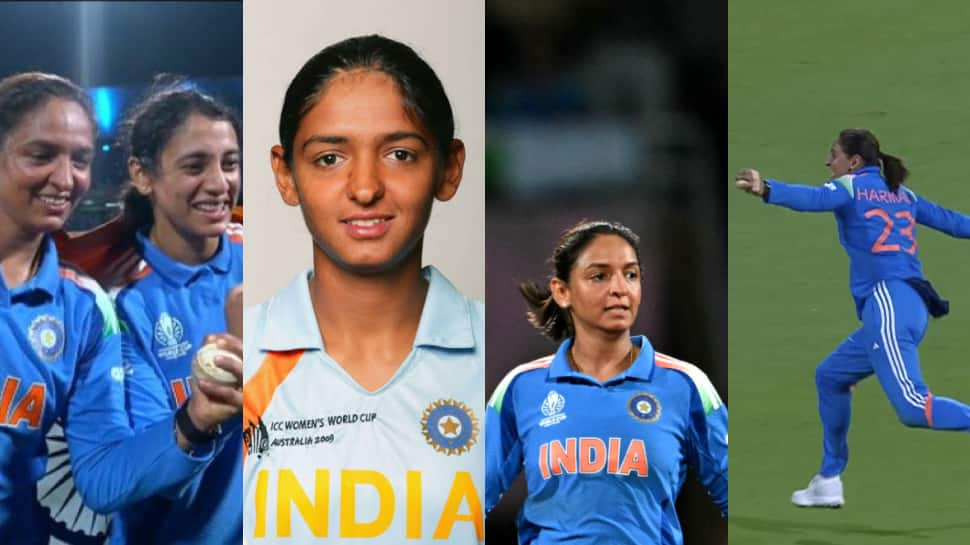
Harmanpreet Kaur’s rise to becoming the captain who led India to Women’s ODI World Cup glory is a journey that began far from the spotlight in the quiet lanes of Moga, Punjab, where cricket for girls was almost unheard of. Born into a humble family, Harmanpreet’s first exposure to the sport came through watching her father, Harmandar Singh Bhullar, who himself played club cricket. He not only encouraged her dreams but also became her earliest training partner, shaping her fierce determination from a young age.
Her foundational cricketing grooming took place under coach Kamaldeesh Singh Sodhi at the Gian Jyoti Cricket Academy in Moga. Coach Sodhi recognized her raw power and fearless approach early on, encouraging her to play with senior boys to toughen her game. Those early years on rough, uneven pitches sharpened her instincts and mental toughness qualities that would later define her identity on the world stage.
The Win
India Women clinched a historic 52-run victory to be crowned ICC Women’s World Cup 2025 champions, defending their total of 298/7 with grit, discipline, and immense heart. South Africa, despite Laura Wolvaardt’s superb century, were bowled out for 246 in 45.3 overs. The final moment came when Deepti Sharma struck the winning blow, getting Nadine de Klerk caught by captain Harmanpreet Kaur, sparking emotional celebrations across the DY Patil Stadium. It was a performance built on unity—Shafali Verma’s fiery 87, Deepti Sharma’s all-round brilliance, Richa Ghosh’s late blitz, and the breakthrough moments from Shafali and Amanjot in the field. After years of heartbreak, near-misses, and what-ifs, India finally lifted their first Women’s ODI World Cup, a moment that will echo forever in Indian cricket history.
The Innings That Changed It All
Harmanpreet first came into national prominence when she made her India debut in 2009. But it was her unforgettable 171 against Australia in the 2017 World Cup semifinal* that changed everything. That innings was not just a display of power-hitting; it was a statement that Indian women’s cricket had arrived and was here to fight.
However, Harmanpreet’s journey forward was not always smooth. Form slumps, injuries, and the burden of leadership all tested her resilience. In 2014, she moved to Mumbai to access better cricketing infrastructure and professional training environments. The move strengthened her tactical awareness and expanded her exposure to high-level cricket. She later became India’s first woman to earn a contract in overseas T20 leagues, including the Women’s Big Bash League in Australia. These experiences refined her captaincy mindset — calm when needed, aggressive when required.
Harmanpreet Transformation
Over the years, Harmanpreet transformed into the emotional backbone of Indian cricket. Under her leadership, the team fought through heartbreaks from close tournament defeats to injuries to senior players yet she continued to inspire her squad with discipline, belief, and fearlessness.
And now, Harmanpreet Kaur stands where she always dreamed of lifting the Women’s ODI World Cup trophy, leading her nation to world champion status. The girl from Moga, who once played on dusty fields with borrowed bats, is now a symbol of ambition, courage, and the power of never giving up.
Her journey is not just a cricketing success story it is a message to every young girl in India:
Dream big. Work relentlessly. The world will make space for you.