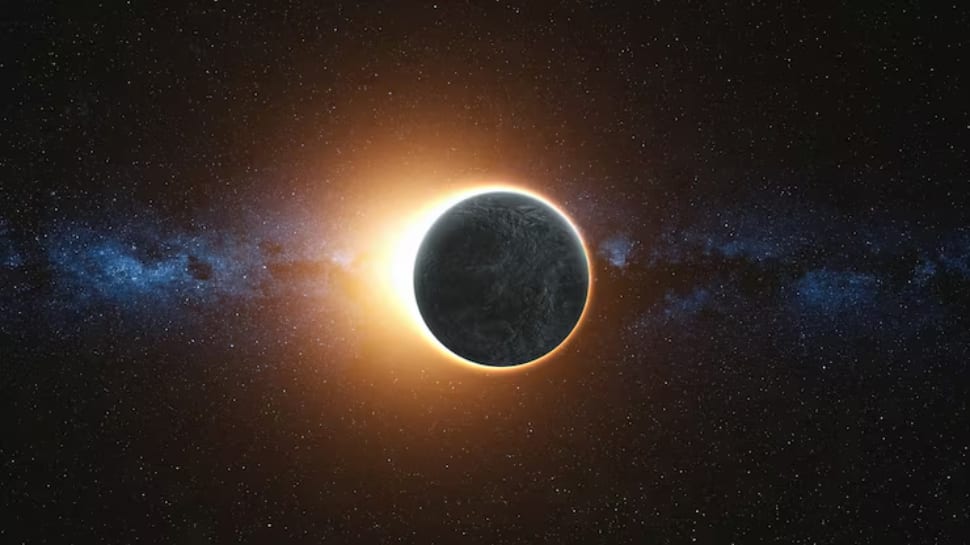
On September 21, skywatchers in select regions of the world will witness a rare astronomical event—a crescent-shaped sunrise caused by a partial solar eclipse. This phenomenon, known as the “Equinox Eclipse,” will take place within the same 24-hour period as the September equinox, when the sun crosses the celestial equator. The shift will mark the arrival of autumn in the Northern Hemisphere and spring in the Southern Hemisphere.
Timings of the Equinox Solar Eclipse
The September equinox will occur at 2:19 pm EDT (18:19 UTC) on September 22, while the partial solar eclipse will unfold a day earlier—between 1:29 pm and 5:53 pm EDT (17:29 to 21:53 UTC) on September 21.
Where Will the Eclipse Be Visible?
The most spectacular views will be from the Ross Sea in Antarctica and parts of southern New Zealand, where up to 86% of the sun will be obscured. In Dunedin, New Zealand, the sun will rise already in eclipse at 6:27 am NZST, reaching its peak of about 72% coverage roughly 40 minutes later.
In Auckland, sunrise at 6:10 am NZST will reveal a partially eclipsed sun, while in the South Pacific, observers in Fiji and Tonga will witness a smaller version of the partial eclipse. Over in Hobart, Australia, viewers will catch a 3% partial eclipse just after sunrise at 6:00 am AEST.
How to Safely Watch the Eclipse
Since this is a partial eclipse, the sun will not be fully covered and will appear as a bright crescent. To view it safely, solar eclipse glasses are essential at all times.
Looking ahead, the next solar eclipse is scheduled for February 17, 2026, when an annular solar eclipse will create a spectacular “ring of fire” lasting up to 2 minutes and 20 seconds.
(This article is intended for your general information only. Zee News does not vouch for its accuracy or reliability.)