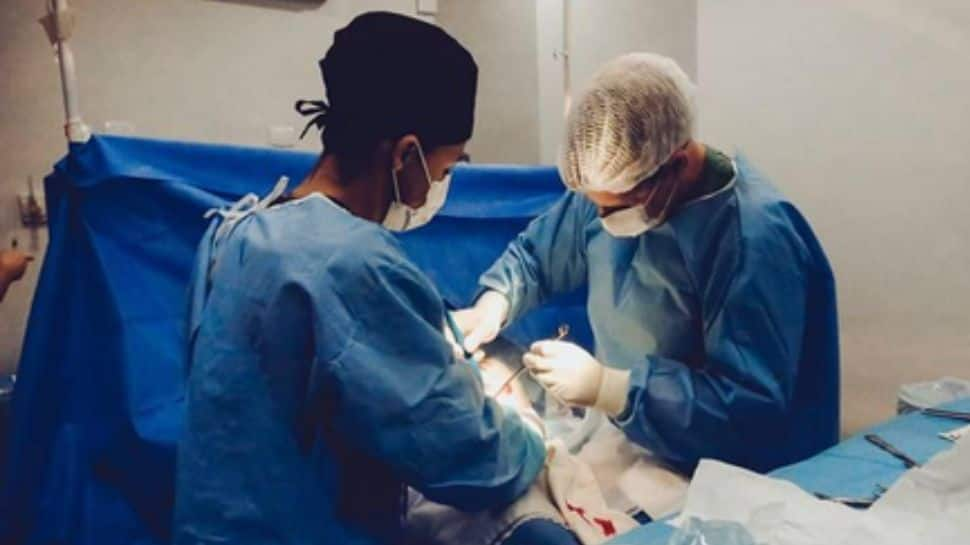
In a groundbreaking medical achievement, doctors in China have successfully transplanted a genetically modified pig liver into a 71-year-old man, who lived 171 days after the procedure, including 38 days with the pig organ in place. The case, now published in a peer-reviewed journal, marks a significant milestone in the field of xenotransplantation, which involves transplanting animal organs into humans.
Experts have previously achieved early success transplanting genetically modified pig kidneys and hearts into humans, and pig livers have been used in brain-dead patients. However, there were concerns about whether the liver, one of the most complex organs in the human body, could function effectively when transplanted from an animal.
Dr. Beicheng Sun, president of the First Affiliated Hospital of Anhui Medical University and a co-author of the study, said, “Everyone always says, ‘Oh, liver is too complicated to transplant, compared to the heart or kidney,’ but after this, in the future, I think people will think differently. I think liver is good if we can get enough human genes in the pig.”
Unlike hearts and kidneys, the liver is more difficult to replace because it is large, has a dual blood supply, and performs multiple critical functions. It filters blood, removes toxins, processes nutrients, detoxifies harmful substances such as alcohol and drugs, produces bile for digestion, generates proteins necessary for blood clotting, and regulates blood sugar levels.
(Also Read: From Monastery To Machine: China’s Cultural War On Tibetan Faith And Identity Explained)
The study, published Thursday in the Journal of Hepatology, suggests that pig-to-human liver transplantation could act as a temporary bridge for patients with serious liver conditions. It may allow a patient to survive long enough for their own liver to recover or for a donor human liver to become available. Dr. Sun added that, “In the future, maybe the left side can regenerate, and we could remove the graft. That would be enough to support life, or at least we could wait one or two months for a human graft that could save his life. This is a very key finding.”
Earlier in May 2024, Anhui Medical University’s First Affiliated Hospital reported that the 71-year-old patient, who had severe liver cancer, received the pig liver. The hospital said, “The patient was able to walk freely. No hyper-acute or acute rejection reactions were found, the coagulation system was not impaired, and liver function had returned to normal.”