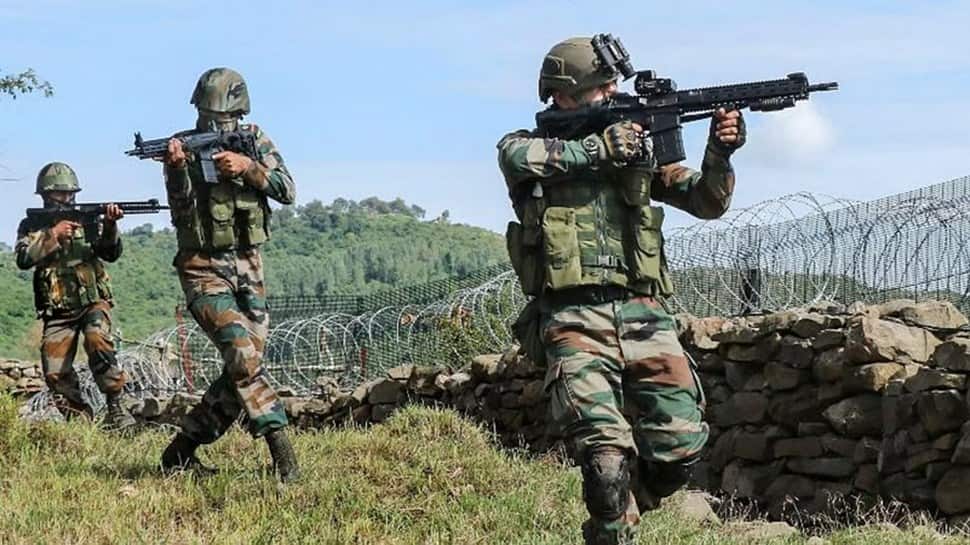
The Indian Army is facing a different kind of challenge this time in Kashmir. After the Pahalgam terror attack, the armed forces carried out Operation Sindoor and Prime Minister Narendra Modi made it clear that any terrorist attack would be considered an Act of War. Now, the army is gearing up for renewed challenges as terrorists have been found using high-tech gadgets and escape routes.
According to a report by The Indian Express, the Indian Army is reinforcing its anti-infiltration grid by sealing and securing key mountain passes, strengthening the Line of Control (LoC) fence, and redeploying troops in critical areas.
Army anticipates a possible rise in infiltration attempts from across the border before winter sets in. Security agencies believe that militants may alter their tactics, prompting corresponding adjustments in the Army’s operational approach.
Unlike earlier instances where terrorists would set up a single hideout far from civilian areas, intelligence inputs now suggest a shift in their strategy. They are expected to maintain multiple shelters—usually two or three—within a small radius of about three to five kilometres, moving between them under the cover of snow.
As per the report, these groups are likely to establish contact only when they move closer to inhabited regions. To escape detection, they might rely less on specialised encrypted apps and more on local mobile networks, blending their activity with the heavy volume of civilian calls.
The Indian Army is drawing lessons from past encounters and there will now be a stronger focus on human intelligence (HUMINT) alongside the already improved technical intelligence capabilities. This combined approach is aimed at improving situational awareness and early warning mechanisms.
The army is also considering the deployment of certain units to meet operational needs. This reshuffling is intended to prevent routine complacency and keep troops alert in high-risk zones.
Additionally, surveillance will be intensified along the Line of Control (LoC) as well as deeper into the hinterland. To ensure faster response times, more Quick Reaction Teams (QRTs) will be established, and the use of drones—including Kamikaze models—is expected to increase. Efforts are also underway to strengthen coordination among various security forces and intelligence agencies to enable seamless and timely information sharing.