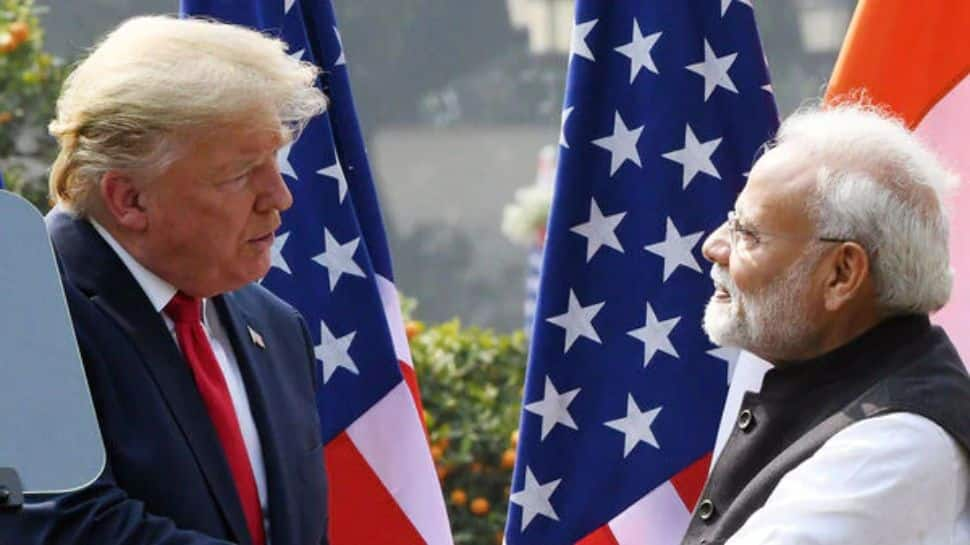
New Delhi: Prime Minister Narendra Modi said during his Gujarat visit this week that global politics was increasingly being driven by economic interests. He said every nation is pursuing its own priorities. He admitted pressure on India can rise and insisted that the country has the strength to endure such challenges.
The remark came just as the Donald Trump administration in the United States announced a steep hike in duties on Indian imports. A fresh 25 percent levy on Indian exports to the United States came into effect from August 27, pushing the total tariff to 50 percent.
While the tariffs were being enforced, PM Modi was addressing gatherings in Gujarat. His speeches focused heavily on self-reliance and his vision of an Atmanirbhar Bharat. He underlined that swadeshi and self-dependence formed the foundation of a developed nation.
He linked this goal to the strength of farmers, fishermen, livestock rearers and small entrepreneurs, assuring that the government would continue to safeguard their interests.
In Hansalpur, he coined his definition of swadeshi. He explained that production in India by companies from Japan also fell within this idea, as long as the labour and sweat were of Indian citizens.
The United States has already issued a draft notice formalising the new duties. The order clarified that Indian products imported or taken out of bonded warehouses after 12:01 a.m. on August 27 would face the higher tariff. With the United States being India’s largest trade partner, the hike is considered a significant setback for New Delhi.
Modi, however, has often argued that the economy needs permanent mechanisms to deal with such external shocks.
So what makes him confident that India can bear the pressure? Analysts point to five factors.
Improved Outlook
Global rating agencies have shown trust in India’s growth story. Fitch highlighted that the impact of American tariffs would be minor since exports to the United States form only around two percent of GDP. It projected 6.5 percent growth for 2025-26.
Meanwhile, S&P Global raised India’s sovereign rating for the first time in 18 years, citing resilience after the pandemic.
Large Domestic Market
India’s consumption share in the world economy could rise to 16 percent by 2050, up from 9 percent in 2023. A McKinsey report attributed this to the country’s young population.
Higher GST Collection
Tax receipts are rising. GST revenue in May touched Rs 2.01 lakh crore, a 16.4 percent jump over last year. April’s collection was the highest ever at Rs 2.37 lakh crore.
Controlled Inflation
The Asian Development Bank estimated inflation at 3.8 percent this year and 4 percent in 2026, well within the Reserve Bank’s target. Retail inflation in July fell to 1.55 percent, the lowest in eight years.
Push On Infrastructure
The government is making infrastructure spending a centrepiece of its budgets. Union Finance Minister Nirmala Sitharaman announced in February large outlays and interest-free loans worth Rs 1.5 lakh crore for states to boost development and manufacturing.
Experts say these pillars (ratings stability, consumption strength, tax buoyancy, inflation control and infrastructure investment) form the cushion that may help India absorb tariff shocks without long-term damage.