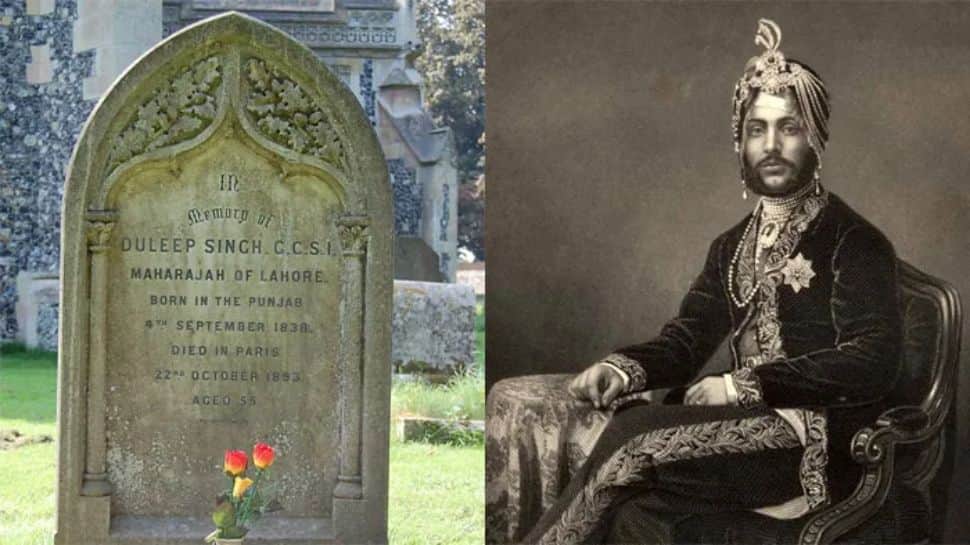
New Delhi: Mussoorie, often called the Queen of Hills, carries more than cool winds and mountain views. Hidden in its valleys lies the forgotten story of a young king who not only lost a throne, but also the legendary Koh-i-Noor diamond and eventually, his identity.
This is the story of Maharaja Duleep Singh, the last Sikh ruler of Punjab and the son of Maharaja Ranjit Singh. Few know that Duleep, the rightful heir to the Koh-i-Noor, spent two summers in Mussoorie under the watchful eyes of the British government.
A Throne Taken Away
In 1849, after the Second Anglo-Sikh War, the East India Company annexed Punjab. He was only 11 years old. His crown, treasure and the Koh-i-Noor diamond were taken from him.
Soon after, he was moved to Fatehgarh in Uttar Pradesh, where he was baptised into Christianity. Later, the British authorities sent him to Mussoorie, not as a guest, but as a prisoner under strict supervision.
Residence Turned Into Prison
The young king’s residence was in the Barloganj area of Mussoorie. The place where he once stayed is now home to the grand Jaypee Manor Hotel. Those days, it was connected to St George’s College through a suspension bridge and later functioned as a monastery until 1936. It was here that Duleep Singh saw the dreams of royal freedom fade away.
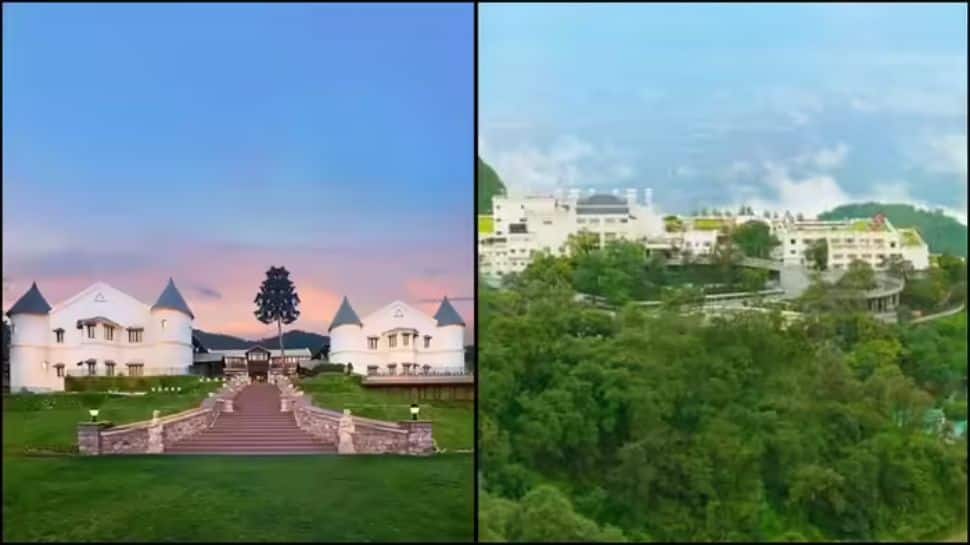
Photo Credit: Historian Gopal Bhardwaj
The Logins And The British Agenda
The care of the boy-king was handed to Sir John Spencer Login and his wife Lady Login. They were tasked with shaping his life, education and habits in the English mould.
Lady Login later wrote in her book ‘Sir John Login and Duleep Singh’ that the young Maharaja loved cricket. A special ground was built for him, which today forms part of St George’s College estate.
Schooling Like An English Boy
Duleep was admitted to Medock School in Mussoorie, located where the Savoy Hotel now stands. He studied there along with children of British officials. He played games, learned lessons and tried to live like an English schoolboy.
His meals sometimes included Punjabi food, but his taste was gradually shifted to English dishes. The authorities ensured he never felt like a free monarch. He was never allowed to visit local fairs or public gatherings. The only outings permitted were controlled ones – cricket matches, archery, picnics and military band parades.
Lessons With A Purpose
During his stay in Mussoorie in 1853, a special series of 20 lectures was organised for the young Maharaja. These were taught by British officers, missionaries and learned men on subjects ranging from religion to science and society. The young ruler enjoyed these sessions, though the hidden aim was clear: to mould an Indian prince into a mind that aligned with British thought.
Echoes In The Hills
Noted historian Gopal Bhardwaj explains, “Tourists today admire the beauty of the Jaypee Manor Hotel, but very few realise that this was once the site of a royal tragedy. Here, a child-king lost his kingdom and struggled with a new identity. Mussoorie still holds the echoes of a boy who was separated from his roots, his childhood and his dignity under the shadow of the Raj.”
The hills of Mussoorie have preserved many stories, but this remains one of the most haunting. A young prince, heir to the Koh-i-Noor, was turned into a captive and forced to trade royal dreams for a childhood scripted by his conquerors.