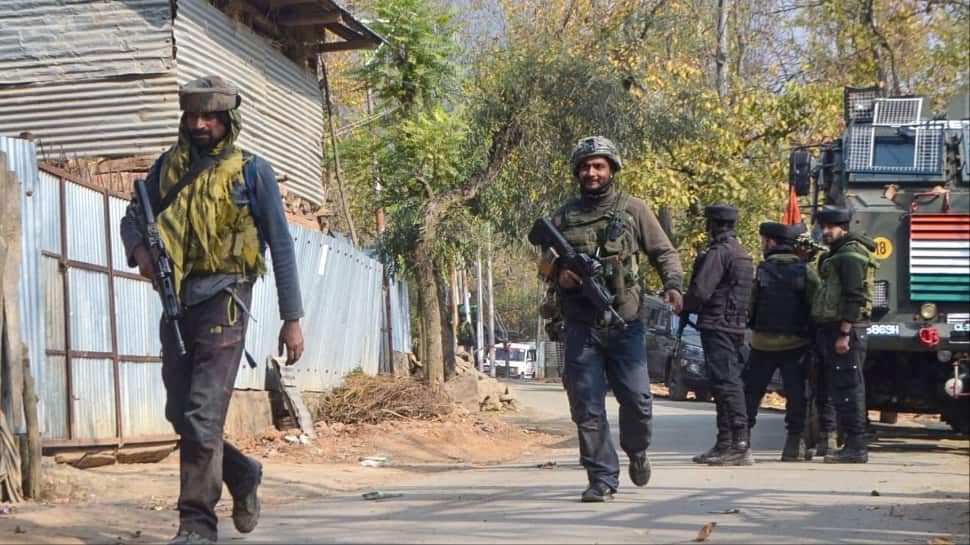
New Delhi: The longest counter-terrorism operation, Operation Akhal, in the Akhal forest area of Kulgam district, has been called off after 12 days. The operation was launched on August 1 after receiving intelligence inputs about the presence of a terrorist group in the area.
The operation was launched based on credible intelligence inputs indicating the presence of 5-6 heavily armed terrorists in the dense Akhal Khulsan forest. The forest is a rugged terrain with dense trees, caves, and steep slopes. The operation was part of a massive crackdown on terrorist networks following the Pahalgam terror attack on April 22, 2025.
It was a joint effort of the Indian Army (including Chinar Corps, Para Commandos, and Rashtriya Rifles), Jammu and Kashmir Police (including Special Operations Group, SOG), and Central Reserve Police Force (CRPF) who were carrying out operations to neutralise terrorists, eliminate local terrorist modules, and disrupt support networks in South Kashmir.
On August 1, security forces launched a cordon and search operation after receiving specific intelligence. The operation turned into an encounter after militants hiding in the forest opened fire, in which a Lashkar-e-Taiba-affiliated terrorist, Haris Nazir Dar, was killed. His body was recovered along with an AK-47 and ammunition.
Intermittent firing took place during the operation on August 2 and 3. According to reports, three more militants were killed, taking the total number to five, although only one body was officially recovered. The slain militants were reportedly affiliated with the TRF/Lashkar-e-Taiba, and one soldier was injured during the operation.
The operation on August 6 and 7 became one of the longest counter-terrorism operations in the Kashmir Valley, continuing till its ninth days.
On August 9, two Indian Army soldiers, Lance Naik Pritpal Singh and Sepoy Harminder Singh, were killed, and two others were injured in heavy firing overnight. A total of 11 security personnel were injured during the entire operation, of which two are in critical condition, according to some sources.
On August 12, the operation was called off after no trace of the terrorists was found after extensive searches, and the operation shifted to a "search and expel" phase after security forces cleared the encounter site.
Reports revealed that the remaining terrorists trained in jungle warfare were probably Pakistani nationals and fled due to the dense forest and challenging terrain.
The dense bushes, caves, rocks, and steep slopes of the Akhal forest provided natural shelters for the holed-up terrorists, complicating the search operation, and they managed to escape. Heavy rains further hampered the operation.
However, the security forces had deployed high-tech surveillance equipment, such as drones, thermal imaging equipment, a Rudra helicopter, and sniffer dogs, as well as para commandos. Despite these resources, the terrorists, taking advantage of the terrain and dense forest and being trained in jungle warfare, posed major challenges.
The 12-day duration of the operation was unprecedented, reflecting the difficulty of tracking down terrorists in such an environment. The prolonged operation led to fatigue and increased exposure among the troops.
One terrorist (Haris Nazir Dar, affiliated with Lashkar-e-Taiba) was confirmed killed, as only one of his bodies was recovered, and at least 5 trained terrorists managed to escape.
Two Army personnel were martyred (Lance Naik Pritpal Singh and Sepoy Harminder Singh), and 11 soldiers were injured, some of them critically.
The operation ended without recovering any more terrorist bodies, raising questions about the effectiveness of the troops.