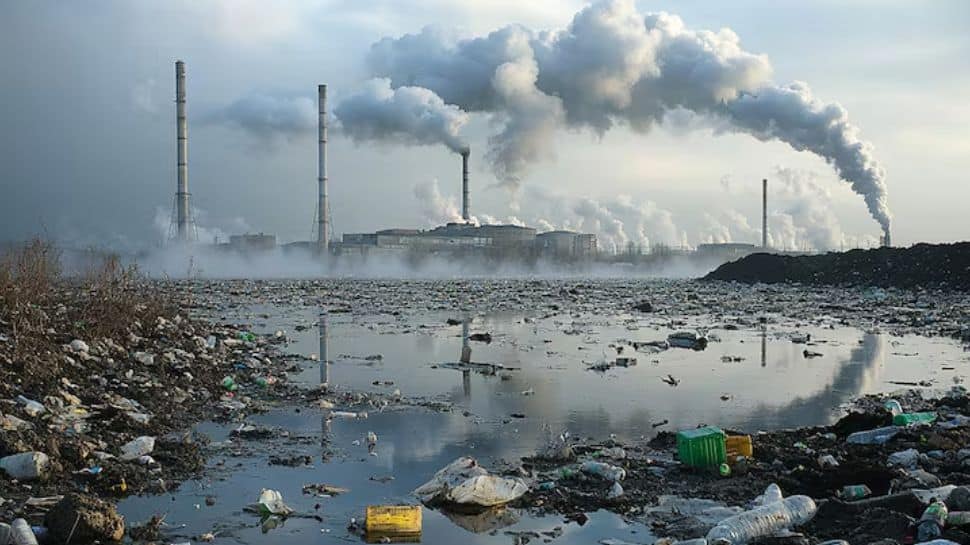
National Pollution Control Day 2025: The new global data shows that pollution — especially air pollution, kills far more people annually than tobacco use or road accidents. Every breath of dirty air shortens lives and causes deadly diseases on a massive scale.
According to a recent report by the Health Effects Institute (HEI) in partnership with UNICEF, exposure to air pollution caused about 8.1 million deaths globally in 2021 — making it the second-leading risk factor for death worldwide, behind only high blood pressure. This means roughly one in eight deaths worldwide is now linked to polluted air.
Environmental pollution more broadly — including air, water, chemical, and soil contamination — was estimated by the World Health Organization (WHO) to have caused 12.6 million deaths in 2012.
Comparisons: Tobacco and road accidents
By contrast, the global death toll from road accidents is far lower. According to earlier WHO-linked estimates, road accidents cause about 1.25 million fatalities annually — a fraction of pollution-linked deaths.
Similarly, although tobacco is a major public health problem, recent analyses show that air pollution has overtaken tobacco as a risk factor. In short, pollution kills more people each year than road accidents — and even more than tobacco use.
Why pollution is so deadly
One of the main reasons is tiny airborne particles (PM2.5) and pollutants such as carbon monoxide, nitrogen dioxide, sulphur dioxide, and ozone. These pollutants come from vehicle exhaust, industrial emissions, the burning of coal/wood for cooking, waste burning, and other sources. Long-term exposure to these pollutants increases the risk of chronic diseases such as heart disease, stroke, lung cancer, chronic respiratory diseases, and acute infections. Indoor air pollution — from cooking or heating with solid fuels — also contributes significantly to premature deaths.
A health crisis often overlooked
Unlike dramatic events such as accidents or diseases, pollution’s harm is slow, invisible, and often unrecognised. Many deaths linked to air pollution are recorded under heart disease, stroke, or lung illness — rather than “pollution.”
Because of this invisibility, pollution rarely gets the same urgent public attention as accidents or smoking — even though its death toll is much higher.
Experts argue that reducing air pollution is one of the most effective ways to save lives. Cleaner transport, green energy, better waste management, cleaner cooking fuels, and stronger regulations on industrial emissions can significantly reduce these deaths.