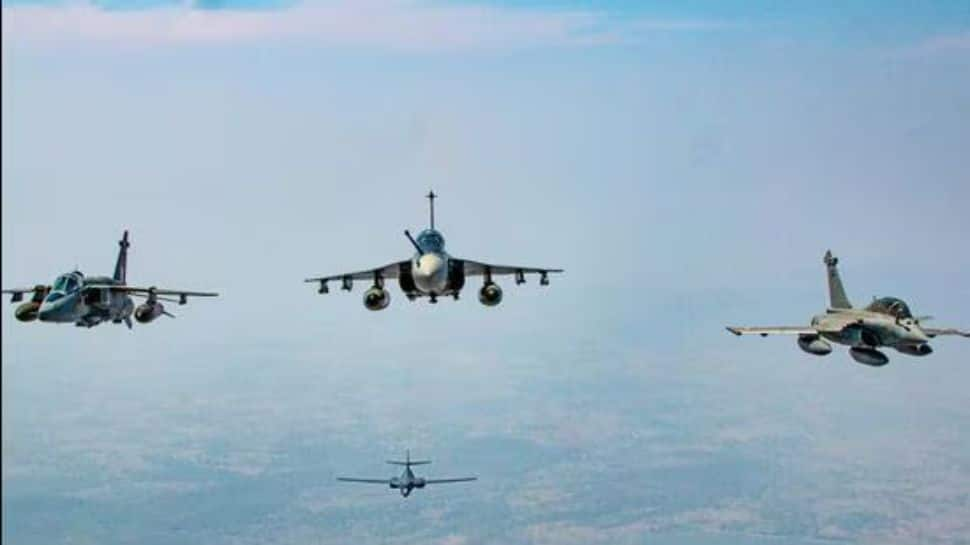
New Delhi: The Indian Air Force (IAF) is set to launch an extensive military exercise across Northeast India from November 13 to 20. The drills will take place near highly sensitive border regions with China, Bhutan, Myanmar and Bangladesh. Su-30MKI, Rafale, Mirage-2000, Tejas and Jaguar fighter jets will take to the skies. The exercise will also involve air defence systems and integrated unified defence operations.
Defence experts report that the IAF has issued a Notice to Airmen (NOTAM) covering the entire Northeast to ensure civilian flight safety. Certain airspace zones will see route diversions or restricted operations during the exercise.
The aim is to test operational readiness in border areas. The exercise will assess joint air and land force responses, along with the efficiency of cyber and electronic warfare systems.
Heightened Alert Over Bangladesh
The drills come amid rising tensions with Bangladesh following recent diplomatic shifts. Interim leader Mohammad Yunus shared a controversial map of Northeast India during meetings with a Pakistan Army general and a Turkish delegation, showing Assam as its part. Delhi views this as a strategic challenge.
Yunus invited China for expanded dialogue and labelled India’s Northeast states as landlocked, drawing international attention to the Siliguri Corridor, also known as the Chicken’s Neck.
This exercise is more than a defence drill. It sends a clear political message that India will not compromise on the security of its borders under any circumstances.
Operation Trishul 2025
Alongside the Northeast, India’s western border is witnessing Operation Trishul 2025. Launched on October 30 and ended on November 10, the exercise spanned Gujarat and Rajasthan, focussing on Kutch and Sir Creek, areas repeatedly tested by Indo-Pak tensions.
The drills showcased the armed forces’ capacity for joint operations, real-time data sharing and coordinated warfighting.
Operation Trishul employed a wide array of military hardware. T-90 tanks, Prachand helicopters, Akash missile systems, BrahMos supersonic missiles and Rafale and Su-30MKI jets were in action.
Surveillance was maintained through Sea Guardian and Heron drones, while Kolkata and Nilgiri-class warships patrolled the western coast. This exercise, considered India’s largest since Operation Sindoor, aimed to elevate joint operations among the Army, Navy and Air Force to new heights.