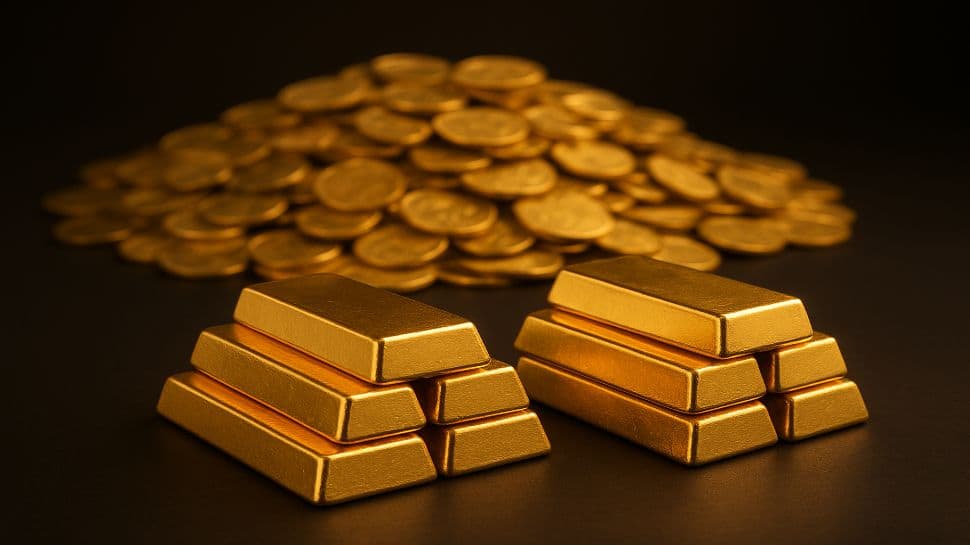
Gold Reserve in India: Money loses value. Markets swing. Currencies fall. But gold stays steady. Across the world, countries are filling their vaults with it. The metal’s price has shot to record highs, not just from jewellery demand, but from central banks racing to secure their future. In times of fear and uncertainty, gold has once again become the world’s favourite shield.
In India, the story is no different. The Reserve Bank of India (RBI) has been increasing its gold holdings. As of October 8, 2025, the country’s total gold reserve stands at 880 tonnes, with significant storage in Nagpur and Mumbai. A portion of India’s reserve also rests with the Bank of England and the Bank for International Settlements.
Over the past decade, India has expanded its gold stockpile by almost 58%. In 2015, the nation held 557.7 tonnes of gold. By 2025, that figure climbed to 880 tonnes. This growth accelerated after 2022, as the government and the central bank viewed gold as a safe strategic asset amid rising global uncertainty.
The price of gold tells its own story. In the financial year 2023-24, gold traded around Rs 70,000 per tola. By 2025, it crossed Rs 1,05,000 per 10 grams, a reflection of worldwide instability, economic slowdown and inflationary pressure.
China has followed a similar path. Between January and September 2025, Beijing bought 39.2 tonnes of gold, pushing its total reserves to 2,298.5 tonnes as of October 8. On average, China has been adding 2-5 tonnes of gold each month. Even with a slower September purchase of 0.4 tonnes, its accumulation pace remains aggressive.
The trend is clear. Nations such as India and China are turning to gold for safety, value and sovereignty. Each new bar added to the vault signals a message to the world: when currencies shake and markets tremble, real power lies in what glitters.