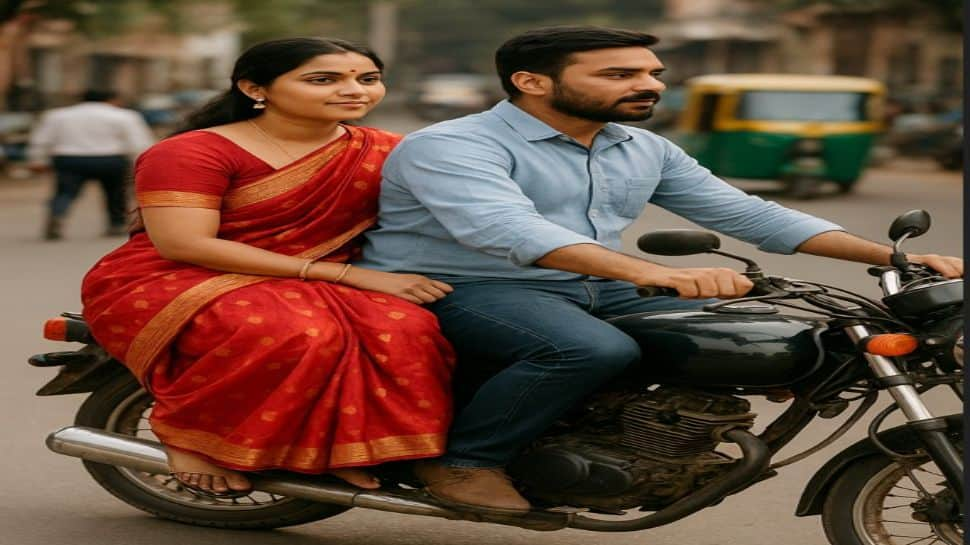
New Delhi: Generations of women in South Asia have followed a curious habit for decades. When a mother, grandmother or aunt rides behind on a motorcycle, her legs always rest on one side. The tradition has persisted across time. Women born in the 1980s and 1990s continued the practice, mirroring the posture of their elders. Men never follow this pattern, but women consistently do.
The reason is not scientific. It stems from centuries-old social codes and cultural influence. The tradition has largely gone unquestioned. Zenith Irfan, a biker and Instagram content creator, has recently revealed the fascinating history behind the practice. She explained that the sideways sitting style was not originally part of South Asian culture. Its roots lie in medieval European customs, particularly among nobility.
She pointed to Princess Anne of Bohemia, who rode horses with her legs on one side during journeys spanning almost 1,600 kilometres. At that time, women were expected to maintain modesty, and riding astride like men was considered inappropriate. Side-saddle riding became a socially acceptable way for women to ride.
The British colonial period brought this custom to India. Women in South Asia gradually adopted the sideways posture. When motorcycles arrived, the habit carried over, creating the style observed today.
Zenith highlighted that this adoption overshadowed indigenous examples of female bravery. She cited Rani Lakshmibai of Jhansi, the famed warrior queen, who rode horses straddling them like male soldiers and fought multiple battles. Such examples demonstrate that local women were capable of riding astride long before colonial influence imposed sideways sitting.
In modern South Asia, the sideways posture continues as a cultural norm. Women often follow it automatically, unaware of its historical origins. The practice is seen as a matter of modesty, tradition and safety, even though motorcycles now allow freedom of movement.
The habit carries with it layers of history, spanning European medieval customs, colonial influence and local adaptation.
Zenith’s explanation has sparked interest and discussion online. Many followers expressed surprise at the connection between centuries-old European riding practices and contemporary South Asian habits. The video highlights how deeply historical practices can shape everyday life, even in seemingly small and habitual actions such as the way women sit on motorcycles.
What appears ordinary today reflects centuries of social codes, imported customs and local adaptation.