


What Is Dutch Disease? The “Illness” Many Countries Are Suffering From Without Realising It
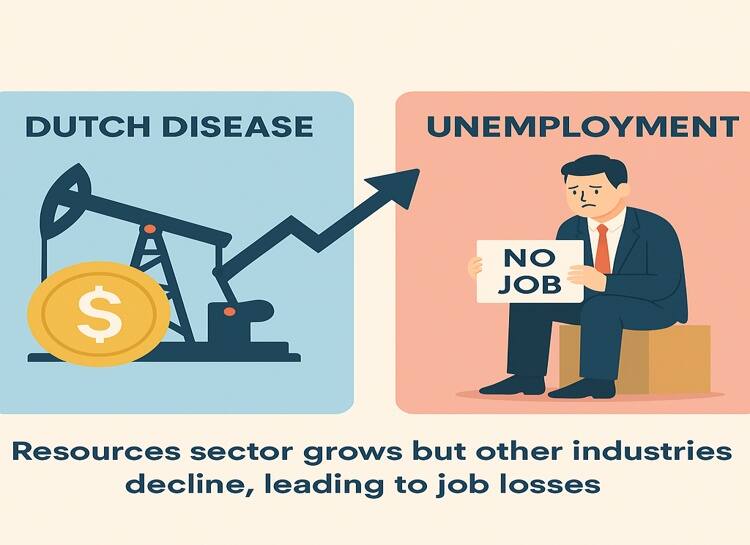
Dutch Disease is an economic condition where rapid growth in one sector, such as oil, gas, or services, weakens other sectors like manufacturing and exports. Large foreign income strengthens the currency, making exports expensive and reducing competitiveness. Over time, economies become over-dependent on a single industry, leading to job losses, regional inequality, and fragile growth unless diversification and balanced policies are adopted.
What Is Dutch Disease in Economics?
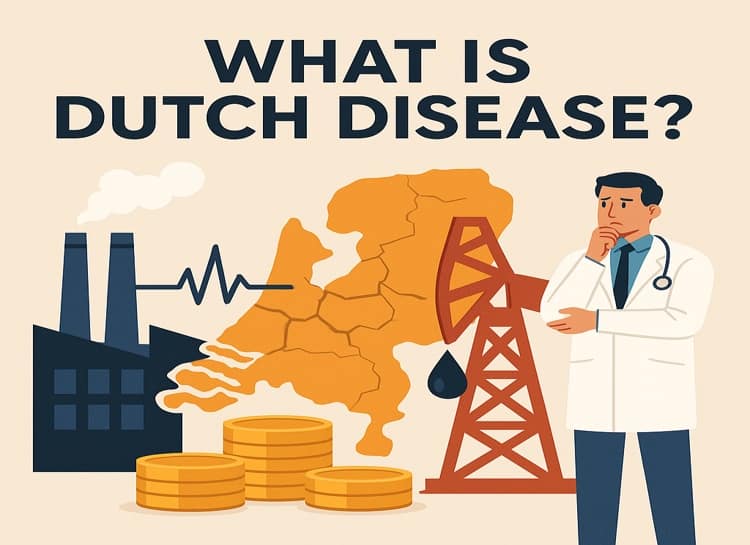
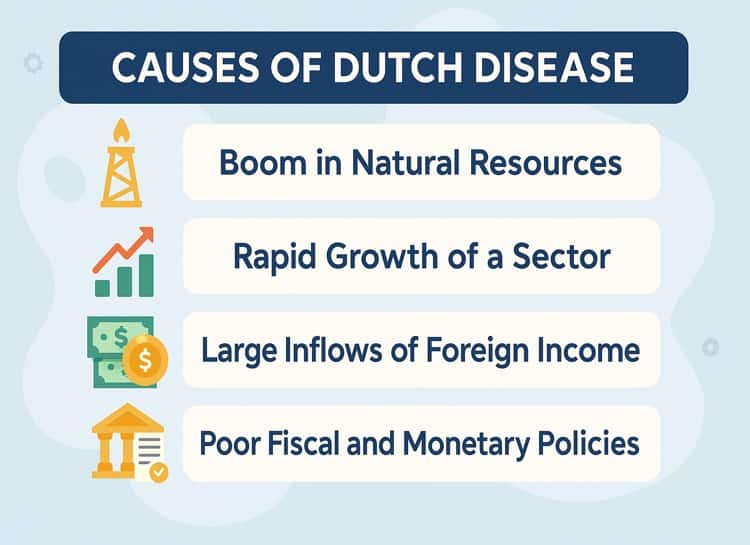
Dutch Disease is an economic phenomenon where rapid growth in one sector of an economy leads to the decline of other important sectors, especially manufacturing and exports. This usually happens when a country earns large foreign income from natural resources, services, or remittances, causing its currency to strengthen and making other industries less competitive.
Why Is It Called Dutch Disease?
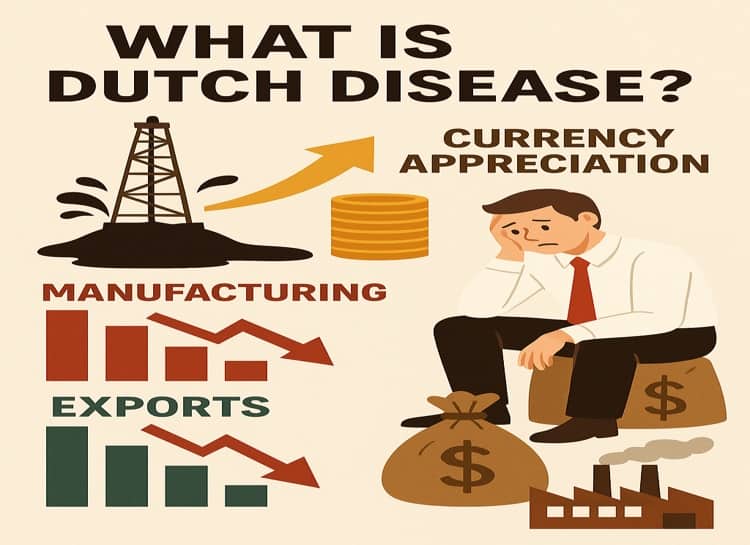
The term originated in the Netherlands during the 1960s, after the discovery of large natural gas reserves. While gas exports boosted national income, the Dutch currency strengthened sharply. This made manufactured exports expensive, leading to job losses and decline in traditional industries. Economists later used the term to describe similar problems worldwide.
How Dutch Disease Works: Step-by-Step
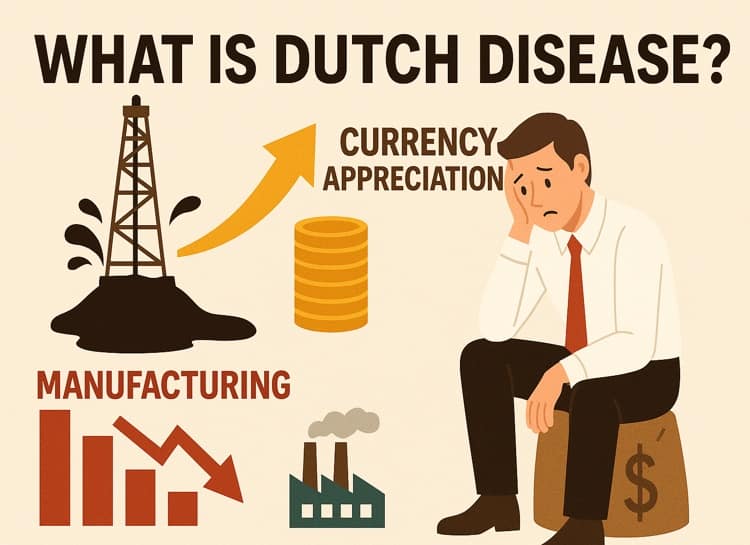
Dutch Disease typically follows this pattern:
A boom in one sector (oil, gas, IT, remittances)
Large inflow of foreign money
Currency appreciation
Exports become costly for global buyers
Manufacturing and agriculture lose competitiveness
Economy becomes over-dependent on one sector
This shift weakens long-term economic stability.
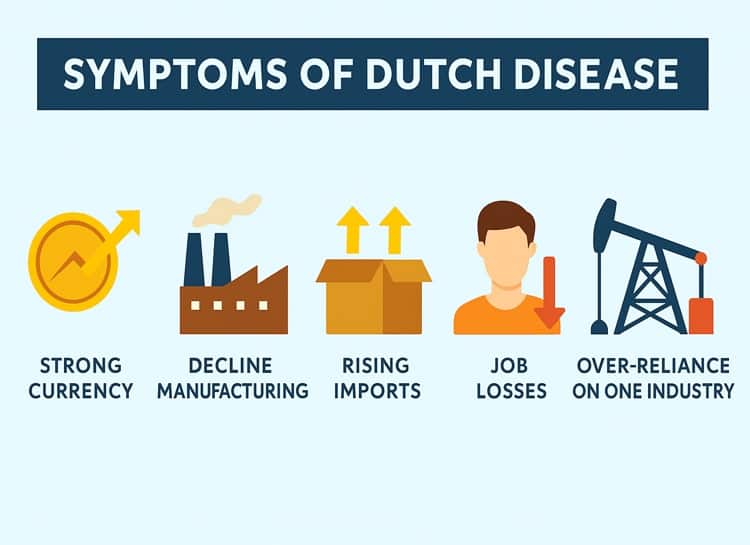
Key Symptoms and Warning Signs
Can Services Cause Dutch Disease? (Modern Form)
Yes. Economists now warn about “services-led Dutch Disease.” Rapid growth in IT, finance, and digital services can pull talent, capital, and policy focus away from manufacturing. This leads to jobless growth and regional concentration, especially in urban hubs.
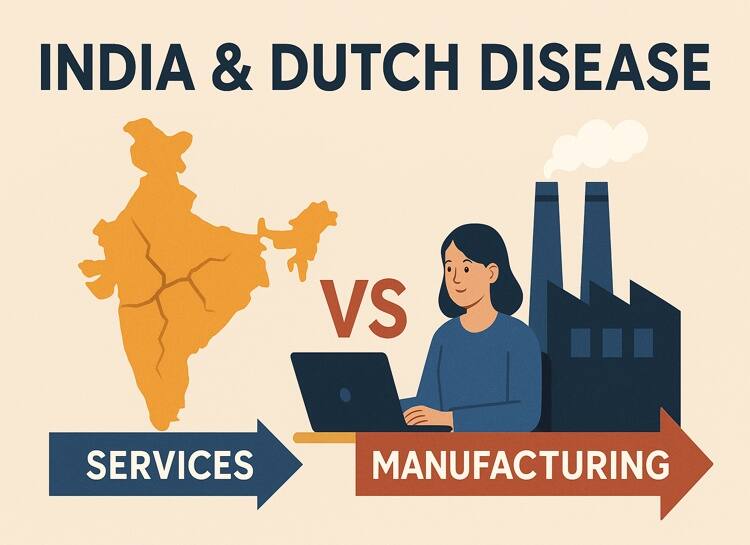
India is often cited as a case where strong services growth risks weakening manufacturing.
Real-World Examples of Dutch Disease
Real-World Examples of Dutch Disease Netherlands
In the 1970s, large natural gas discoveries boosted exports and national income. However, the stronger currency made Dutch manufactured goods less competitive globally, hurting traditional industries. This case gave the phenomenon its name: Dutch Disease.
Nigeria & Venezuela
Oil booms brought huge foreign earnings, but they also strengthened local currencies. As a result, manufacturing and agriculture declined, making these economies heavily dependent on oil and vulnerable to price shocks.
India
India’s rapid growth in services such as IT and finance has raised concerns among economists. While services flourished, manufacturing growth lagged, limiting large-scale job creation and increasing regional inequality—often described as a services-led version of Dutch Disease.
Australia
A prolonged mining boom pushed up the Australian dollar, which hurt exporters in manufacturing, tourism, and education by making them more expensive for global buyers.
Gulf Countries
Many Gulf economies became highly dependent on oil revenues, slowing diversification into manufacturing and services. This dependence exposed them to sharp economic swings when oil prices fell.
How Countries Can Prevent or Manage Dutch Disease
Governments can reduce the impact of Dutch Disease by:
Diversifying the economy
Investing in manufacturing and exports
Using surplus income for infrastructure and education
Supporting regional development
Maintaining balanced exchange rate policies
Countries that manage growth wisely avoid over-dependence and ensure sustainable development.