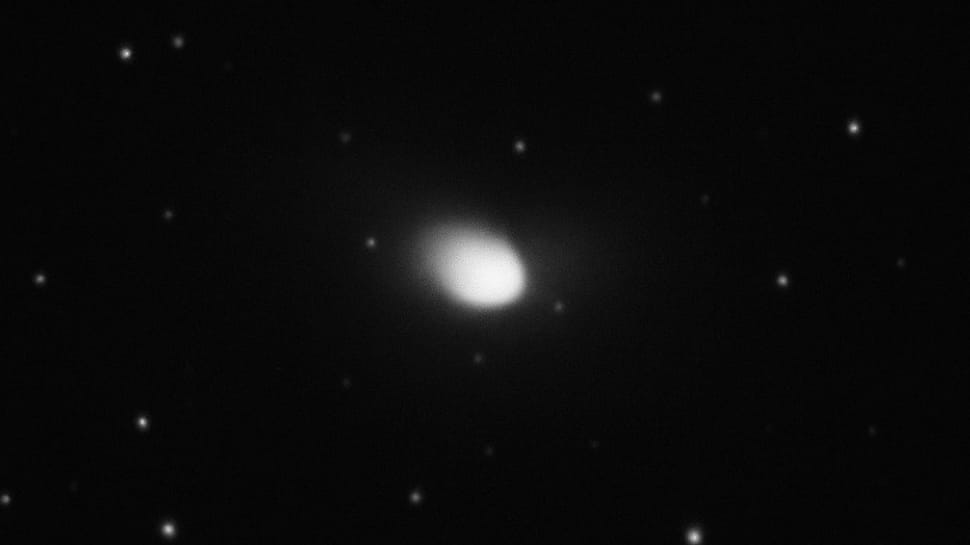
Visitor From Stars: Astonishing Journey Of Interstellar Comet 3I ATLAS And What It Tells Us About The Cosmos - Check All Updates
3I/ATLAS Latest Update: A rare cosmic wanderer from another star system, 3I/ATLAS is only the third interstellar object ever observed in our solar system, and it’s defying expectations at every turn. From its hyper-fast arrival to surprising outgassing and alien-probe speculation, this icy intruder offers a once-in-a-lifetime window into the unknown.
Discovery: Spotting the Cosmic Interloper
The comet 3I/ATLAS was first detected by the Asteroid Terrestrial‑impact Last Alert System (ATLAS) telescope in Río Hurtado, Chile, on 1 July 2025.
Follow-up archival data revealed pre-discovery observations from other telescopes, confirming its unusually fast trajectory and hyperbolic orbit.
Because its path cannot be bound by the Sun’s gravity, astronomers confirmed it originated from another star system, earning the “3I” designation (the third interstellar object recorded) and the “ATLAS” after the discovering survey. NASA Science
Speed, Path & Cosmic Origin
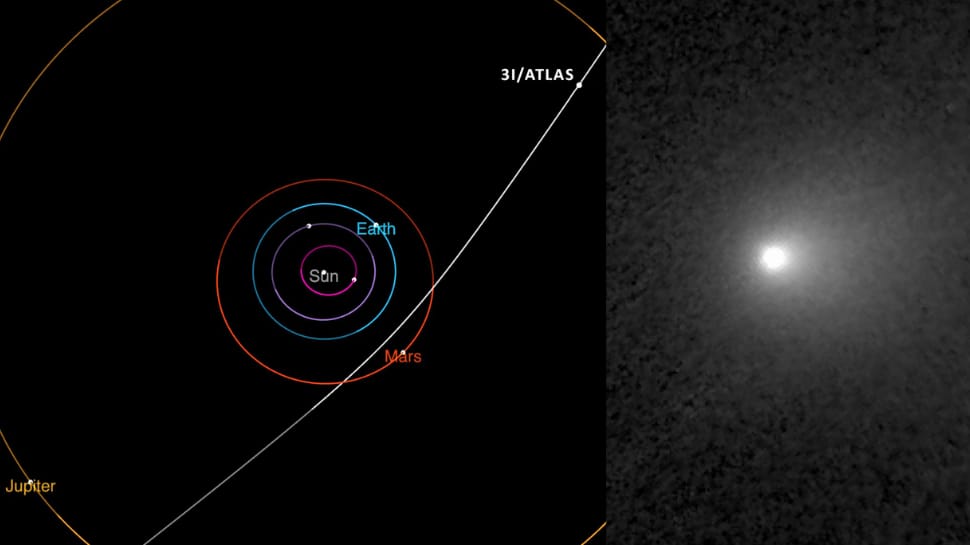
3I/ATLAS stands out because of the speed and trajectory that betrayed its extra-solar origin. It’s moving at roughly 60 km/s (≈ 137,000 mph) relative to the Sun, far faster than most comets from our solar system.
Its orbit is hyperbolic (eccentricity well above 1), meaning it will not remain bound to the Sun but will exit our solar system.
The comet appears to have come in from a direction near the constellation Sagittarius, which corresponds roughly to the general direction of the Milky Way’s centre.
What Is It? Comet, Asteroid, Or Something Else?

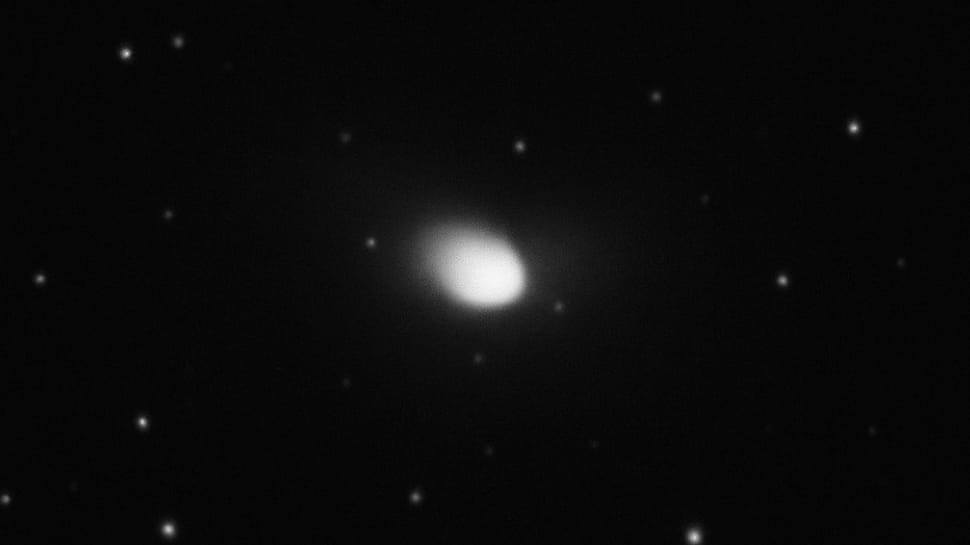
While its name labels it as a comet (C/2025 N1(ATLAS)), there was initial debate over whether it might be an asteroid. Ground-based observations quickly showed it has a coma and tail, i.e., it’s active, so the consensus is that it is a comet.
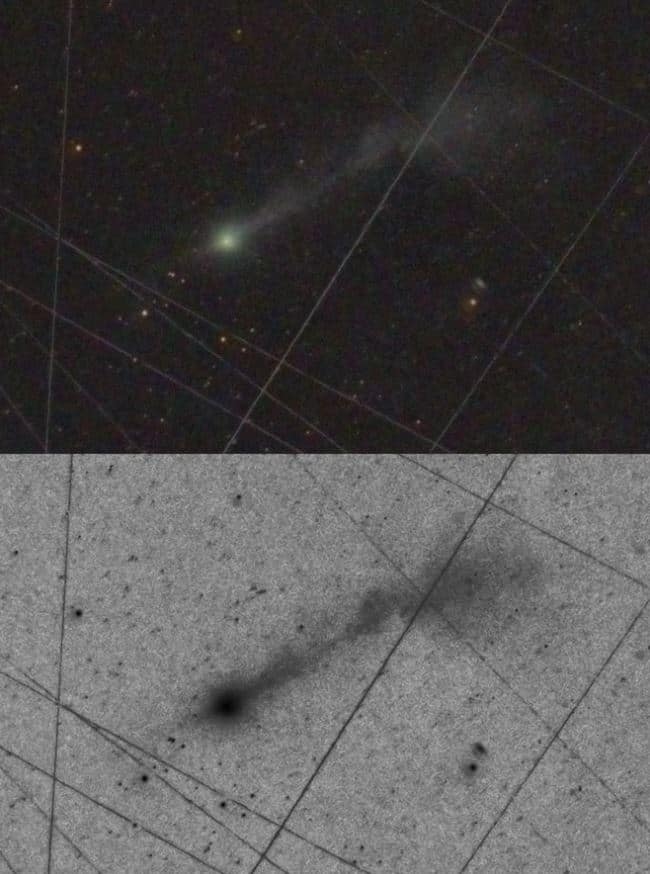
Notably, activity such as outgassing, jets and dust emission have been detected, reinforcing the comet classification.
Size, Age & Composition Clues
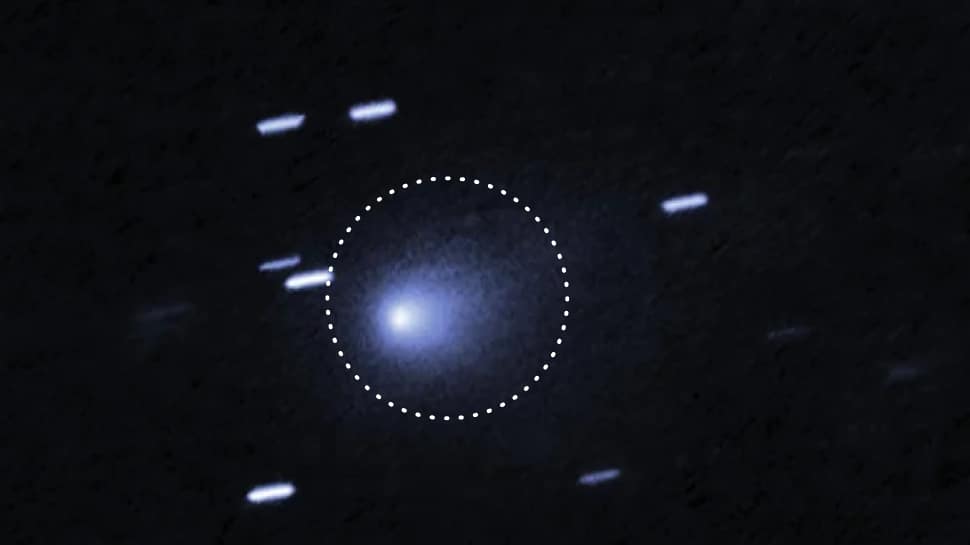
Estimates of 3I/ATLAS’s nucleus size have varied widely, initial figures suggested perhaps ~10 km across, but later refinements suggest a smaller size (potentially down to a few km or even less).
Observations by the James Webb Space Telescope and other instruments suggest the object is likely extremely old, perhaps on the order of 7 billion years, having experienced billions of years of cosmic-ray irradiation in deep interstellar space.
That radiation appears to have created a crust of altered material rich in carbon dioxide ice and other processed volatiles.
Unusual Activity: Jets, Tail & Water Leakage
After 3I/ATLAS approached its closest point to the Sun (perihelion on 29 October 2025) its activity has increased in strange ways. Astronomers have captured dramatic jets of material being ejected from the nucleus toward the Sun, not just away, an atypical orientation for comet jets.
Meanwhile, even when still relatively far from the Sun, the comet was leaking water-derived vapour (hydroxyl signatures) at a distance where water ice usually would not sublimate.
In earlier observations, it also developed a tail and a coma of dust and gases, for instance, the growing tail as the object crossed our inner system.
Why It Matters: A Treasure-Trove from Beyond
Because 3I/ATLAS comes from outside our Solar System, it offers a nearly unique chance to examine material formed in a different planetary system. The chemical makeup, age, activity and trajectory can all help scientists answer questions about how star systems form, evolve and eject material into interstellar space.
Furthermore, studying such objects can help refine our models of cosmic dust/ice chemistry, and perhaps even the distribution of life-building materials across the galaxy.
Observing the Visitor: When and How to See It
While 3I/ATLAS is visible only through telescopes and not to the naked eye, amateur and professional astronomers are tracking it. From late November 2025 it will re-appear in the morning sky after perihelion, though its brightness remains modest (magnitude ~9–12, requiring a decent telescope).
During its closest approach to Mars (~3 October 2025) spacecraft orbiting Mars were also tasked with observing it.
For Earth-based watchers: it will not pose any collision threat, its path keeps it safely far from Earth.
Controversy & Speculation: Is It Natural?
While the prevailing view is that 3I/ATLAS is a natural comet, some scientists have raised intriguing alternatives. Avi Loeb, a Harvard astrophysicist, has proposed (primarily as a thought experiment) that the object’s odd behaviour, high speed, unexpected jets, unusual composition, might warrant consideration of an artificial origin (e.g., alien probe) though he emphasises that the simplest explanation remains natural.
Regardless, the debate has drawn public attention and underscored how much we still don’t know about such interstellar visitors.
What’s Next: The Race to Learn More
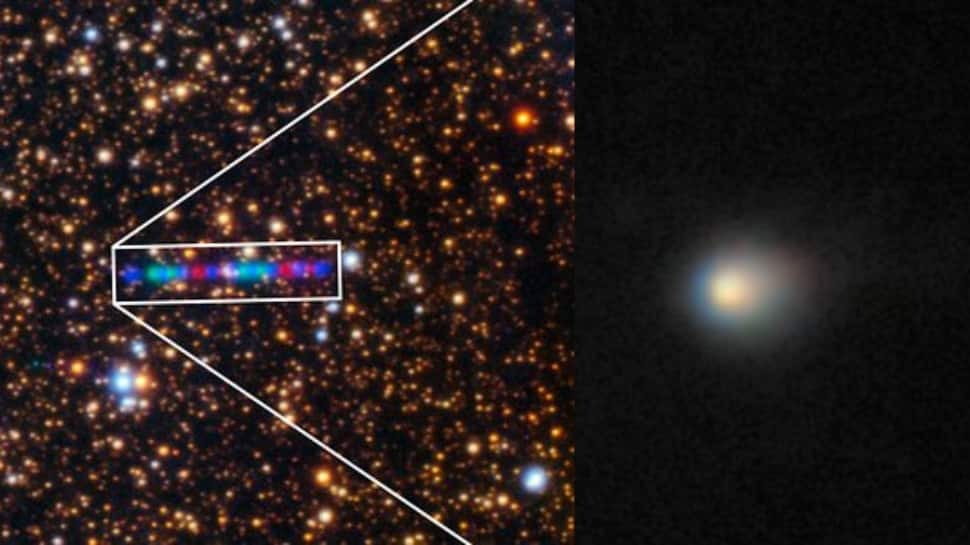
As 3I/ATLAS recedes out of our solar system after perihelion, scientists are scrambling to gather as much data as possible. Telescopes such as JWST, the Hubble Space Telescope, and planetary-spacecraft instruments (e.g., at Mars, Jupiter) are being used to study its composition, tail particles, and interaction with solar wind.
Each observation helps refine our understanding of what this visitor is and where it came from. Because it will not return, this window is very much a one-time opportunity.
Points You Should Remember
It’s only the third interstellar object ever observed in our solar system, after 2I/Borisov (2019) and 1I/‘Oumuamua (2017).
Its hyper-bolic trajectory and extreme speed confirm it did not originate in our solar system.
The object shows unusual activity (water leakage far from Sun, jets oriented toward Sun, etc.) that challenge existing comet models.
Because it comes from another star system, it offers one of the few direct samples of “alien” material — not made here around our Sun.
We have a limited timeframe to observe it before it exits our neighbourhood forever.
Cosmic Messenger or Just Comet?
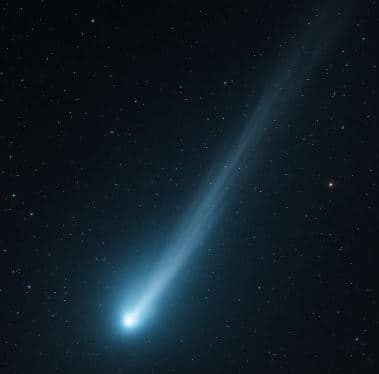
The frozen wanderer 3I/ATLAS reminds us that our solar system is not isolated, objects from far beyond can wander in and visit, carrying clues about distant worlds. Whether you view it purely as a “normal” comet from another star, or allow yourself to ponder more exotic possibilities, the data it brings are priceless. For astronomers and enthusiasts alike, it’s a front-row seat to a cosmic guest whose origins and nature challenge our assumptions. As we watch it journey away, we’re left with more questions than answers, and that’s perhaps the most exciting outcome of all.