


Animals' 'working memory' systems similar to humans: Study
In a study that could help advance drug development for Alzheimer's disease, researchers have found that a key aspect of human memory impaired in memory disorders exists in the type of pre-clinical animal models that influence major decisions about drug development.
Jan 16, 2016, 14:42 PM IST
Fish intake by would-be mom helps growth of baby`s brain
A recent study has found an explanation for the correlation between eating fish during pregnancy, and the health of the baby's brain.
Jan 15, 2016, 13:32 PM IST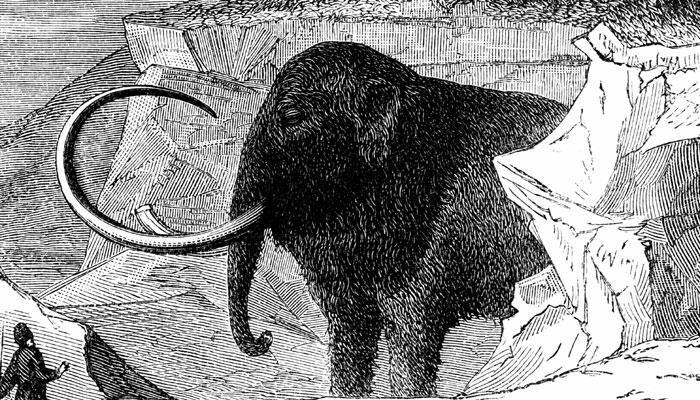
Ancient people conquered the Arctic at least 45,000 years ago
The frozen carcass of a woolly mammoth found in Siberia with unmistakable signs of spear wounds is providing evidence that people inhabited Arctic regions thousands of years earlier than previously known.
Jan 15, 2016, 13:21 PM IST
Songbirds sing like humans: Study
A songbird's vocal muscles work like those of humans and singers, finds a new study.
Jan 13, 2016, 17:28 PM IST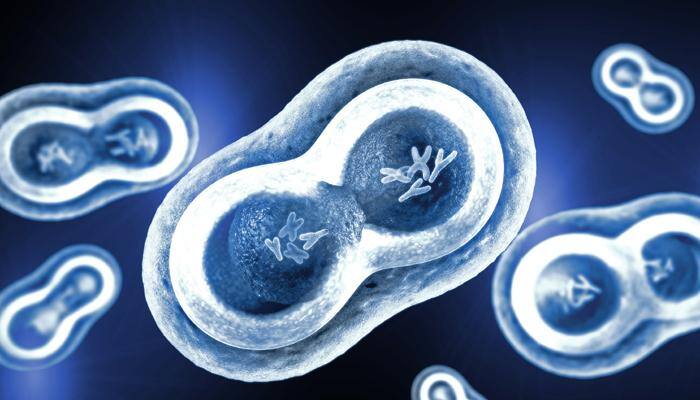
Science behind XY and XX chromosomes in human being
A recent study has revealed the evolution of X chromosome and why it contains an unusual mixture of genes.
Jan 13, 2016, 15:00 PM IST
Could a cholesterol-lowering drug treat Parkinson's?
In their quest to find new treatments that could slow, stop or reverse Parkinson's disease, a progressive neurological condition that affects movement and speech, researchers in Britain are set to investigate in humans the potential of a cholesterol-lowering drug in treating the disease.
Jan 11, 2016, 18:14 PM IST
Gene tweaking helped humans walk upright: Study
Researchers at Stanford University have identified a change in gene expression between humans and primates that may have helped give us an edge to walk upright.
Jan 09, 2016, 00:20 AM IST
Human-Neanderthal relationships may be root of modern allergies
Passionate encounters between ancient humans and their burly cousins- the Neanderthals, may have left modern people more prone to sneezes, itches and other allergies, researchers say.
Jan 08, 2016, 10:20 AM IST
Stroking helps calves grow better relation with humans
A study focused on conventional dairy farming has found that calves can only develop a good relationship with humans if their caretakers have regular and gentle interactions like stroking lower part of their neck.
Jan 03, 2016, 15:14 PM IST
Scientists sequence first ancient Irish human genomes
A team of scientists in Ireland has sequenced the first genomes from ancient Irish humans, which is now being used to answer pivotal questions about the origins of the country's people and their culture.
Jan 02, 2016, 16:12 PM IST
Neural activity of moving animal recorded in 3D
Researchers in Princeton University have developed an instrument that allows three-dimensional recordings of neural activity in nearly the entire brain of a free-moving animal.
Dec 31, 2015, 15:57 PM IST
NASA gets $55 million funding to send humans to Mars
US space agency NASA to spend at least $55 million on a “habitation augmentation module”.
Dec 30, 2015, 13:20 PM IST
Human's ability to perceive melodic pitch isn't unique
Seems like we are not alone in how we perceive a melodic pitch as marmosets have showcased the same talent.
Dec 29, 2015, 11:17 AM IST
Dogs can copy their pal's expressions
In an indication that dogs could possess basic levels of empathy, researchers have found that our canine friends, just like humans, are capable of imitating the expression of their play mates.
Dec 27, 2015, 17:34 PM IST
Crows too know how to make and use tools!
If you thought only humans or primates can forge and use tools, you are wrong. Crows can make, use, and even store for re-use certain tools while foraging for food, a new study shows.
Dec 25, 2015, 00:23 AM IST
Mental time travel a unique human capacity: Study
Humans appear to be the only species who are able to remember events that they had experienced and mentally time travel not only into the past but also the future, suggests new research.
Dec 23, 2015, 18:24 PM IST
Here's how human brain can handle so much data
Researchers led by an Indian-origin scientist from Georgia Institute of Technology have discovered how humans can categorise data using less than one percent of the original information
Dec 16, 2015, 16:35 PM IST
Did you hear it? Our vision and hearing is not very reliable
Our vision and hearing are not as reliable as we might think, the study by life scientists at University of California-Los Angeles (UCLA) said.
Dec 11, 2015, 13:16 PM IST
Why Neanderthals' faces are different from humans
New findings, based upon facial growth patterns, indicate that Neanderthals and humans are indeed sufficiently distinct from one another.
Dec 08, 2015, 14:45 PM IST
Mercury level in dolphins linked to exposure in humans
The most toxic form of mercury known as methylmercury builds up in fish, shellfish, and animals that eat fish, and are the main sources of mercury exposure in humans.
Dec 05, 2015, 16:41 PM IST