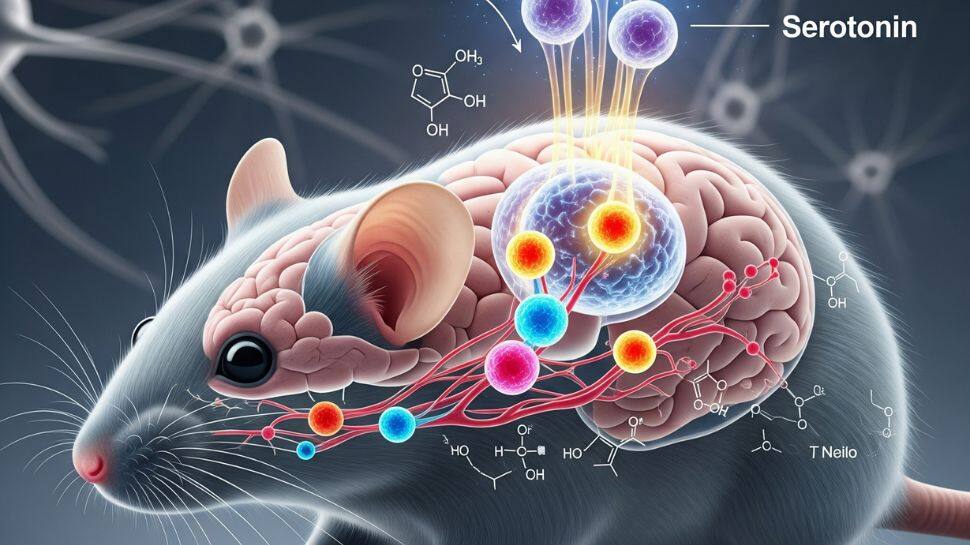
In a revolutionary discovery, Chinese researchers have made a big breakthrough in the treatment of depression. They have successfully turned human stem cells into special brain cells that could produce dopamine and then transplanted them into mice.
During research scientists found that the new brain cells helped reduce depressive behavior in the animals, offering hope for future treatments of mental health disorders.
The study, published on August 11 in the journal Cell Stem Cell, was carried out by scientists from the Chinese Academy of Sciences at Fudan University and UniXell Biotechnology. Their goal was to target the root cause of depression by repairing parts of the brain that control mood and reward.
According to a report of 'South China Morning post', Dopamine is a chemical messenger in the brain that plays a key role in motivation, pleasure, and movement. People with depression, especially those suffering from treatment-resistant depression, often show reduced dopamine activity. One major symptom is anhedonia, the inability to feel joy from activities that once brought happiness.
The researchers had focused on a group of dopamine-producing neurons called A10 neurons, which are strongly linked to reward-based behavior. Problems in this neuron system are associated not only with depression but also with schizophrenia and drug addiction as mentioned in the 'South China Morning post'.
By exposing human stem cells to a carefully designed chemical mix at just the right stage, the team successfully created A10-like neurons. These engineered neurons behaved exactly like natural A10 cells in terms of their structure, molecular markers, and electrical activity.
When transplanted into mice that had been made to show depression-like symptoms through chronic stress, the new neurons produced remarkable results.
During the research process, animals showed reduced signs of anxiety, despair, and resignation. They also regained the ability to experience pleasure, indicating relief from anhedonia.
Importantly, the transplanted cells integrated well into the brain and received signals from surrounding neurons and repaired dopamine-related pathways.
The scientists believe this targeted therapy could have major advantages over traditional antidepressant drugs, which often cause unwanted side effects. Instead of broadly altering brain chemistry, this approach has directly rebuilt faulty neural circuits.
This research has provided strong proof of concept that cell-based therapies could become a powerful tool in treating depression and could possibly cure other psychiatric disorders.
For now, the work is still at the animal testing stage, but experts see it as a advanced step toward a new era of personalized mental health treatments.