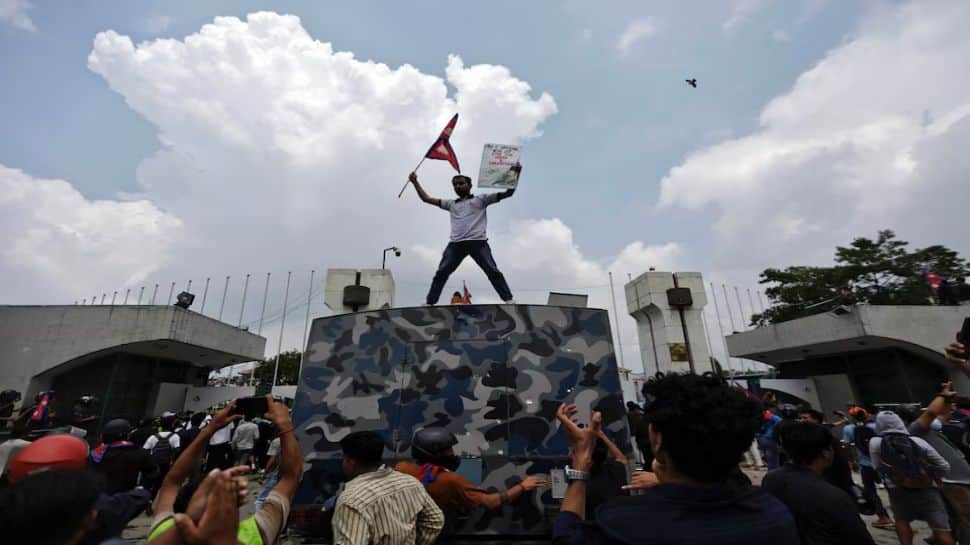
Kathmandu: Nepal’s streets erupted with Gen-Z-led protests after the government banned major social media platforms. The demonstrations escalated into violence, forcing Prime Minister KP Sharma Oli to resign. Following the unrest, the Army has stepped in to mediate talks between youth representatives and President Ramchandra Poudel. Army Chief Ashok Raj Sigdel met with agitators to understand their demands and prepare for dialogue scheduled for September 10 (today).
The immediate trigger for protests was the sudden ban on 26 US social media platforms, including Facebook, YouTube, Instagram and X (formerly Twitter). The ban aimed to enforce registration compliance. Born and raised in the digital era, young citizens perceived it as a direct assault on their freedom. Their demands quickly expanded to include ending corruption and government mismanagement.
After violent demonstrations, the government partially reversed the social media ban, but public anger had already peaked. Protesters set fire to parliament, Singha Durbar, and the Supreme Court. Security forces tried to control the crowds. At least 22 protesters died and more than 300 were injured.
Ruling party leaders and officials faced attacks. Prime Minister Oli’s residence came under siege. Finance Minister Bishnu Prasad Paudel was chased through streets. Protesters stormed prisons, allegedly freeing around 900 inmates.
Amid escalating chaos, the Army asked PM Oli to resign. He complied, citing the need to resolve the crisis and allow political solutions.
Army Chief Sigdel took responsibility for stabilising the situation and appealed to youth representatives to come forward for dialogue. In a televised address, he said, "We appeal to protesting groups to stop demonstrations and come forward for peaceful dialogue for the sake of the nation. We must restore order, protect historical and national heritage, public and private property and ensure safety of citizens and diplomatic missions."
The Army warned against vandalism, looting or arson. To restore law and order, it emphasised decisive action if unrest continued.
Reports suggest that one Sudan Gurung, founder of NGO Hami Nepal, mobilised Gen-Z protesters for the agitation. The NGO allegedly used social media to guide students on routes, safety and protest coordination.
Gurung, 36, lost his child in the 2015 earthquake, which shaped his activism. He previously led protests for transparency at BP Koirala Institute of Health Sciences and emerged as a digital-era organiser translating youth frustration into action.
He confirmed that his group requested official permission for rallies. Students were allegedly instructed to wear school uniforms and carry books to signal peaceful protest. Despite these measures, demonstrations turned violent. Protesters attacked leaders’ residences, offices and public buildings.
The Nepal protests reflect a generation demanding accountability, digital freedom and political reform. The Army’s mediation aims to bridge the gap between youth aspirations and state authority, while the country navigates unprecedented social and political turbulence.