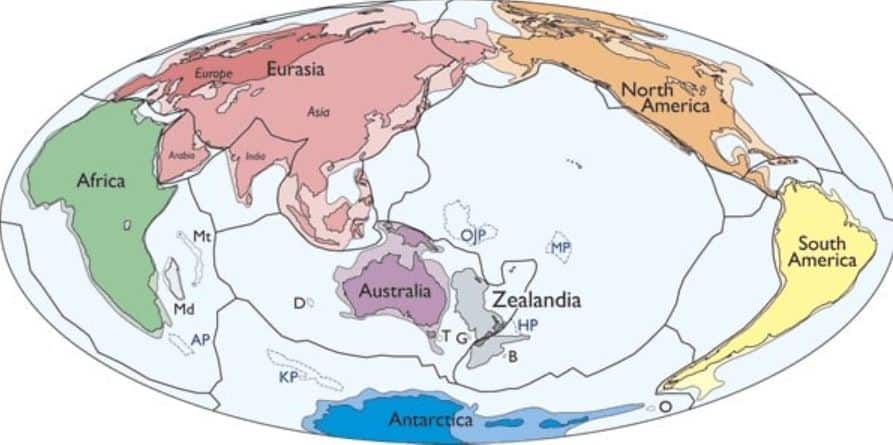
Zealandia Emerges After 375 Years Underwater: For nearly four centuries, a massive landmass the size of India lay hidden beneath the Pacific Ocean, unseen, unmapped, and overlooked. Today we know it as Zealandia: a 4.9-million-sq-km continent, almost entirely submerged and missing from the world’s geological charts until modern science finally caught up.
The 2017 Shock That Rewrote Earth’s Map
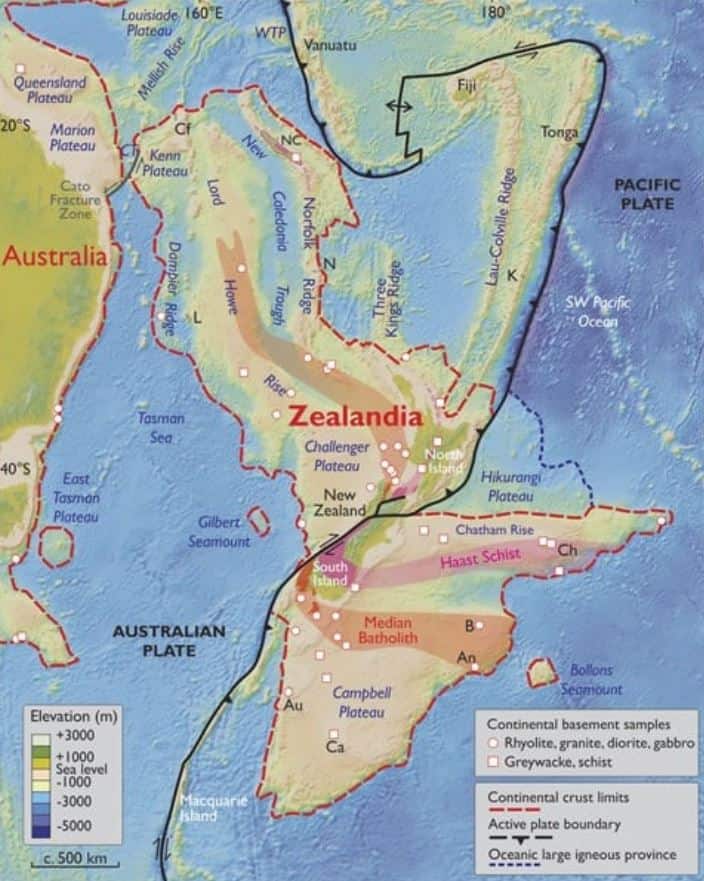
Although hints had been accumulating for decades, the breakthrough came in 2017 when geologists published a landmark paper in GSA Today. They confirmed that Zealandia meets all four criteria of a continent, distinct geology, sizable area, crustal thickness, and elevation relative to surroundings. The catch? 94% of it is underwater, making it nearly impossible to identify until satellite gravity maps and deep-ocean bathymetry filled in the gaps.
Why Zealandia Sank And How It Hid for Millions of Years?
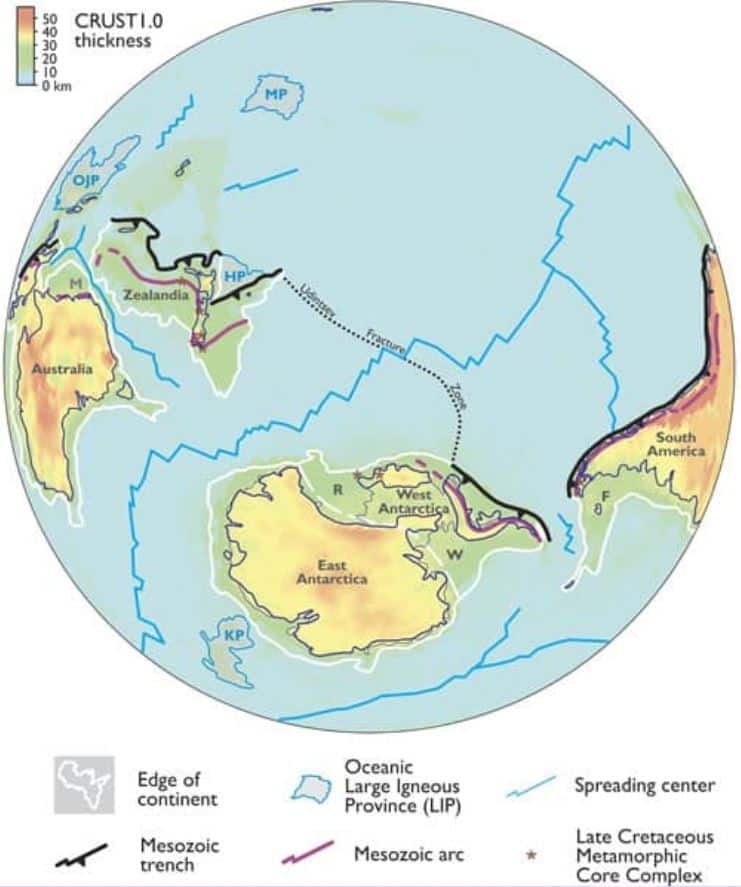
Zealandia’s continental crust is unusually thin, just 20 km compared to the 30-45 km typical of other continents. Scientists believe this thinness caused the landmass to sink after breaking away from the supercontinent Gondwana around 85 million years ago. Whether it submerged all at once or gradually over millions of years remains one of geology’s ongoing debates.
Clues That Went Unnoticed for Centuries
The idea of a southern landmass isn’t new. Back in 1642, explorer Abel Tasman unknowingly sailed over what we now recognise as Zealandia’s continental shelf. Later, in 1895, Scottish naturalist Sir James Hector suggested New Zealand was the visible tip of a drowned continent, an observation that slipped quietly into scientific archives. Only in the 1990s did the term Zealandia gain momentum, thanks to geophysicist Bruce Luyendyk.
Why New Zealand Cared About the Discovery
Zealandia’s formal recognition wasn’t just scientific, it was strategic. Proving the submerged plateau is part of New Zealand’s continental shelf could unlock vast offshore natural resources under the United Nations Convention on the Law of the Sea.
Drilling Deep for Answers
In 2017, the International Ocean Discovery Program set out to test the theory with six deep-drilling missions across Zealandia. The sediment cores pulled from more than 4,100 feet below the seabed revealed lost worlds: microfossils, pollen, and hints of shallow seas, all evidence that parts of Zealandia were once above water.
Fossils That Rewrite Ancient Life in the Pacific
Fragments of dinosaurs, including sauropods and ankylosaurs, have been found in New Zealand and the Chatham Islands. These fossils date back to long after Zealandia separated from Gondwana, proving pieces of the continent remained dry land long enough to support ancient terrestrial life.
The Mysteries That Still Remain
Despite the confirmation, big questions linger.
When exactly did Zealandia sink?
Was it ever fully submerged?
And what other lost landmasses might still be hiding beneath our oceans?
What’s clear is this: Zealandia isn’t just a scientific curiosity. It’s a reminder that Earth still holds secrets powerful enough to rewrite our understanding of the planet.
(Pic Credits: Geosociety)