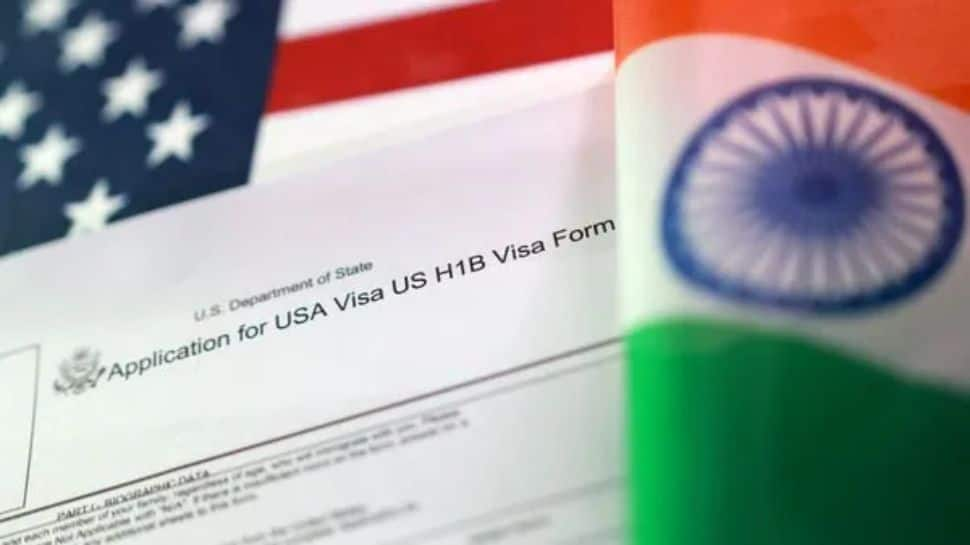
Washington: A wave of new charges under the US travel visa programme is now being imposed on several Asian countries. Japan, India, Sri Lanka, the Philippines, Pakistan, Bangladesh and others are included in this sweeping change that raises the cost of applying for visas. The United States has designed the increase to strengthen immigration security and upgrade processing systems.
The fee hike is being viewed across Asia as an expensive barrier at a time when professionals, students and tourists continue seeking opportunities in America. The growing cost has also triggered a debate inside many countries that depend heavily on US job markets and student visas.
Japan: Big Skills, Tiny Presence
Japan’s position in the US job market remains very small. Data from 2024 shows that only 439 Japanese applicants were approved for H-1B visas that is barely 0.2 percent of the total issued worldwide.
Japan’s reputation as a technological leader is well known. The domestic job market offers comfort and stability, which often keeps engineers and researchers at home. The long visa application process in the United States feels difficult to many Japanese professionals. It requires detailed paperwork, sponsorship and navigating a tough lottery system.
If Japanese tech companies create more partnerships with American employers, the number of workers trying for H-1B visas in the future could rise.
India: Powering The World’s Future
India sits at the centre of the US tech workforce. A massive 80,449 H-1B visas were approved for Indian nationals in 2024. This is 57 percent of all visas granted across the world. A strong STEM education system and a huge pool of programmers, engineers and medical experts fuel India’s lead.
Silicon Valley continues to depend on Indian talent for advanced computing, cybersecurity, artificial intelligence and software development.
Competition remains intense because demand is far greater than the number of visas available each year. The lottery selects only a portion of highly skilled professionals who apply.
Sri Lanka: Invisible In Numbers
Sri Lanka accounted for only 221 approved H-1B visas in 2024. It is a tiny 0.1 percent of the total. Professionals who leave the country often head toward the Middle East because of easier pathways to employment.
The country’s workforce still focusses heavily on agriculture, traditional industries and jobs that do not match the main careers linked to H-1B visas. Limited exposure to the US visa system and fewer tech-focussed graduates keep Sri Lanka away from major growth in this category.
Philippines: Strong Skills, Small Share
Filipino workers are well-known across the world for their strong command of healthcare and service industries. In 2024, the Philippines secured 3,456 H-1B visa approvals, representing 2.4 percent of the global total.
Many Filipino professionals also find good opportunities in Asia and the Gulf region. The US tech sector still draws a steady line of applicants from the Philippines, especially nurses and engineers who qualify for specialised roles.
Better guidance on application requirements could increase the country’s share of US visas in the years ahead.
Pakistan: Talent Held Back
Pakistan saw 1,954 approved H-1B visas this year. That makes up 1.4 percent of the total. The country has thousands of skilled workers in IT and engineering. But the road to the US job market remains uneven.
The H-1B system is competitive and hard to navigate when applicants lack access to expert legal support and professional networks. Many workers continue to choose regional destinations for jobs because of the lower cost and simpler rules.
The recently introduced 100,000 dollar fee burden on employers could further discourage smaller US companies from hiring Pakistani professionals.
Bangladesh: Only A Few Make It
Bangladesh remains a very small player in the US visa field. In 2024, only 765 H-1B approvals were granted which is 0.5 percent of the world total. Most Bangladeshi workers still find jobs in garments, construction and other sectors that are not linked with H-1B demand.
Awareness about pathways to high-technology roles is still growing. If Bangladesh increases its investment in STEM education and builds stronger industry-academia ties, more skilled workers could qualify for American opportunities in the future.
South Korea: Quiet But Growing
South Korea adds an important piece to the picture. It recorded 2,382 H-1B approvals in 2024 that is 1.7 percent of the global number. South Korean technology companies are expanding into automation, robotics, medicine and advanced electronics. This helps create a skilled group of professionals who find their way into US companies.
The visa competition remains stiff for Korean applicants as well. Access to more information and mentorship for new graduates can help widen the country’s presence in the United States.
The Common Challenge
Each of these nations has different strengths and different reasons for their visa numbers. The new US fee structure now adds heavier pressure to every applicant who dreams of life and work in America. Families planning trips, young graduates hoping to study abroad and experienced engineers aiming for Silicon Valley will need to spend more and plan more. With the rising cost, many fear delays, cancellations or loss of opportunities.